
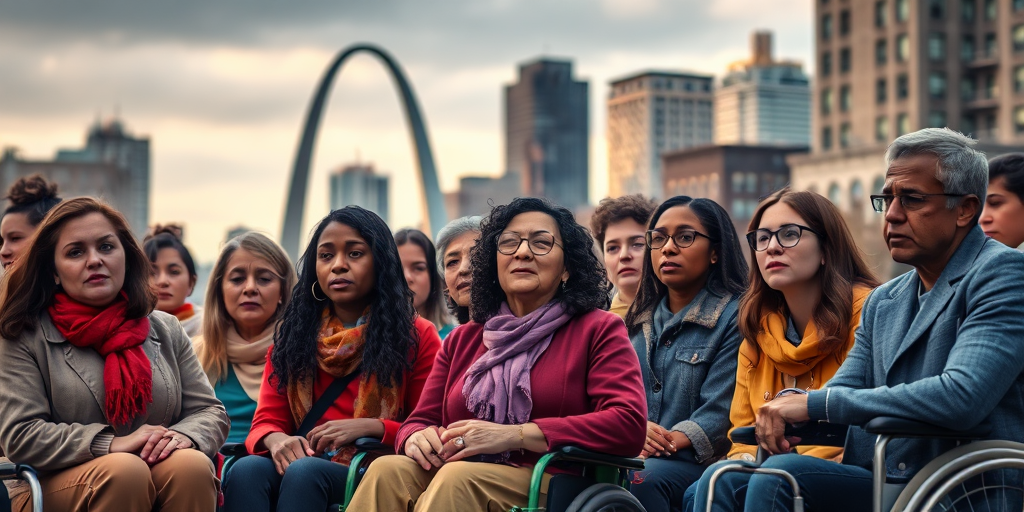
Empowering Change: How St. Louisans with Disabilities Strive for Inclusive Equity
The city of St. Louis, known for its pioneering efforts in accessibility, continues to serve as a beacon of hope for those championing disability rights. Thirty-five years after the implementation of the landmark Americans with Disabilities Act (ADA), local advocates are not just looking back at their progress but also casting their eyes forward, striving for a future where equity extends to all.
Historical Context and Legislative Milestones
The ADA, a cornerstone of civil rights for individuals with disabilities, ensured that millions could access public life with dignity. In St. Louis, the disability rights movement was accelerated by trailblazers such as Max and Colleen Starkloff, who played an instrumental role in advocating for buses with lifts and curb cuts in sidewalks—facilities considered revolutionary at the time.
Despite their efforts, evidence points to significant ongoing challenges. According to recent statistics, more than 70% of seniors in the U.S. reside in homes lacking basic accessibility modifications like ramps or grab bars. This gap highlights a pivotal issue: legislative progress alone does not always equate to practical implementation.
Community Voices: Personal Experiences in St. Louis
During a recent episode of St. Louis Public Radio’s “St. Louis on the Air,” key figures from the community shared insights into their personal journeys as individuals with disabilities in the St. Louis region.
Lori Becker, CEO of the Starkloff Disability Institute, recounted how groundbreaking audio descriptions have enhanced her theater-going experience despite her visual impairment. “The first time I used audio description at a play, it was life-changing,” she remarked, describing vividly a performance of The Lion King where the narration brought the vivid colors and detailed movements to life.
Meanwhile, Raven McFadden, board chair of FestAbility, shared her frustrations with inaccessible housing. Although she resides in an apartment with wide doorways, her kitchen remains off-limits. McFadden expressed, “I love to cook, but the kitchen’s design renders it unusable for people like me in a power chair.”
Seyoon Choi, a vocational rehabilitation counselor for Missouri Rehabilitation Services for the Blind, emigrated from South Korea in search of greater opportunities. He candidly discussed the microaggressions he faces, noting, “A well-meaning stranger might suddenly grab my elbow on the bus without consent. It’s a stark reminder of how society often perceives people with disabilities.”
The Economic Argument: Accessibility and Local Economies
Accessibility advocates argue that beyond moral imperatives, economic incentives drive cities to become more inclusive. Becker highlighted, “Our community has tremendous buying power. If events or facilities aren’t accessible, not only do we stay away, but so do our friends.” By enhancing accessibility, cities like St. Louis can potentially boost local economies by attracting a larger demographic to cultural and athletic events.
Reflecting on Broader Issues
These personal stories underscore broader systemic challenges regarding self-image and societal inclusion. From structural barriers to cultural perception, St. Louisans are prompted to consider how they, as a community, can foster environments that support all individuals.
For officials and policymakers, these stories are critical in shaping future approaches to disability advocacy. They highlight the necessity of addressing both physical and attitudinal barriers that persist and envision a society that recognizes diverse abilities as a strength rather than a limitation.
Future Implications and Community Resources
As St. Louis evaluates its current accessibility framework, collaboration remains key. Engagement with communities, leveraging insights from those with lived experiences, and proactive planning can set the stage for meaningful reform. The city has the chance not only to uphold its legacy as a leader in accessibility but to redefine it for future generations.
For those interested in participating in these discussions or seeking resources on accessibility issues, entities like the Starkloff Disability Institute offer guidance and advocacy support. Community forums and public sessions aim to ensure diverse voices are heard, allowing residents to contribute to shaping local policies.
Through ongoing dialogue and persistent advocacy, St. Louisans have the potential to transform their city and beyond into spaces where equity is not a distant ideal but a lived reality. By harnessing the spirit of collaboration, they continue to push the boundaries towards a more inclusive and equitable world for all.


