
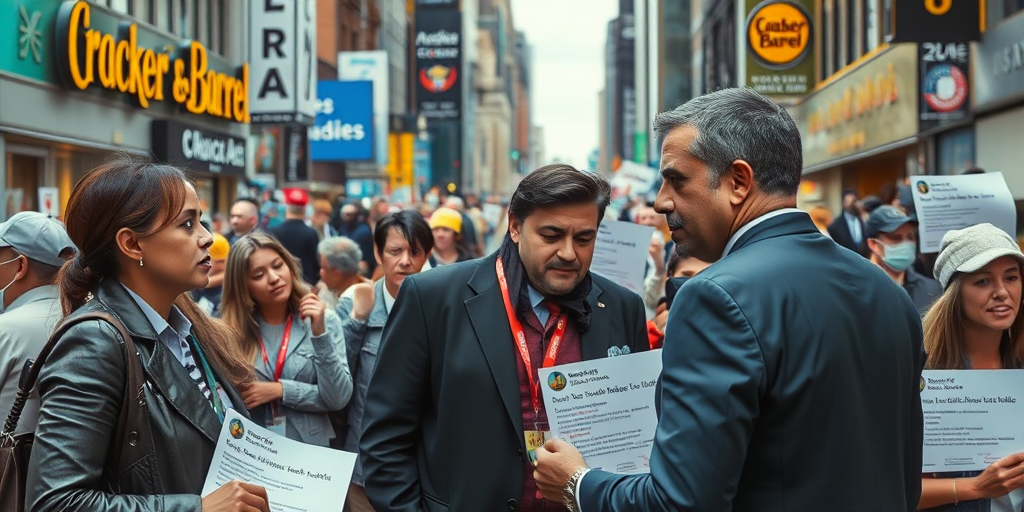
Trump’s War on “Woke” Sparks Divergent Fortunes for U.S. Brands
Donald Trump’s ongoing crusade against “woke” culture is shifting the commercial landscape for American companies, leading to varied consequences for businesses navigating the politically charged environment. The experiences of Cracker Barrel and American Eagle illustrate how these cultural conflicts affect corporate strategies and customer relations across the nation.
Polarizing Backlash for Cracker Barrel
Cracker Barrel, renowned for its southern-style dining and retail model across America’s highways, recently felt the sting of conservative backlash after unveiling a controversial new logo. Seen as a capitulation to “woke” ideologies, the logo ignited an online firestorm, resulting in significant reputational damage and operational reassessment. The chain now faces the daunting task of repairing its image while addressing business impacts.
Ellen Graben, a cultural studies expert at a local Texas university, explains, “Cracker Barrel’s experience is a classic example of how modern companies must tread carefully around political issues. A brand’s alignment, or perceived alignment, with social movements can dramatically shape consumer perception.”
Navigating Political Waters
The experiences of Cracker Barrel are not isolated. Many American brands find themselves caught in the crosscurrents of cultural shifts characterized by heated debates over social issues. Apparel giant American Eagle, in contrast, has weathered the storm of political alignment differently—by aiming to remain relatively neutral, allowing it to maintain a broad consumer base despite polarized opinions.
Rebecca Goldman, a retail industry analyst notes, “American Eagle’s more cautious approach serves as a counterpoint to companies like Cracker Barrel. Remaining neutral or focused on core brand identity can be a safer path for firms wary of alienating any segment of their consumer base.”
Impact on Local Communities
The impact of these cultural dynamics is tangible at the local level, especially in rural and conservative regions where shifts in brand identity can influence consumer loyalty and local economies. In communities where businesses like Cracker Barrel are fixtures, a blow to local outlets affects employment rates and supplier relationships.
Rogelio Sanchez, a local Cracker Barrel manager in Fort Worth, Texas, shared, “The backlash was surprising and led to tangible business impacts. Our usual clientele showed hesitation, which was concerning not just for our daily bottom line, but for our staff whose livelihoods depend on a bustling business.”
Connecting to Past Events
This is not the first time commercially vulnerable brands in America have intersected with political controversies. Previous incidents involving companies publicly affiliating with social movements saw varied results. Brands with strong regional ties typically face heightened scrutiny, reflecting the complex American landscape where local sentiments can critically impact business viability.
Larry Decker, a political strategist in Nashville, Tennessee, reflects on the phenomenon, “We’ve seen that companies which navigate cultural tides with finesse often fare better. A community-first approach can fortify businesses against potential political upheavals, ensuring sustained operations through turbulent times.”
Future Implications
The ongoing culture wars are expected to persist, compelling U.S. companies to refine their brand strategies continually. Companies that adeptly manage their public persona, balancing social accountability with business interests, will more likely thrive.
Furthermore, the overarching implications of these cultural divides suggest that companies—including those based in traditionally conservative locations—must anticipate varying consumer reactions and align corporate policies cautiously.
Deborah Kane, a retail strategist, indicates that these phenomena signal deeper trends. “Smart companies will use real-time analytics and market research to gauge customer sentiment, allowing them to pivot nimbly and mitigate backlash,” Kane says.
Balancing Corporate Culture and Public Expectation
Ultimately, the landscape encourages a nuanced approach where transparency and consistency in communication prove vital for customer trust. Companies like Cracker Barrel and American Eagle may boost resilience by fostering open dialogue with valued customers, catering to both local and national sentiments judiciously.
For concerned residents seeking guidance on navigating the rapidly shifting consumer environment, local consumer rights organizations and business councils offer resources and workshops. They provide community members guidance on understanding corporate policies and advocating effectively for consumer interests.
The discourse around “wokeness” in corporate America shows no sign of waning. With brands as prominent players in societal reflections, the stakes for maintaining favorable financial performance and public standing remain high, shaping how the economy functions amid growing political complexities.


