
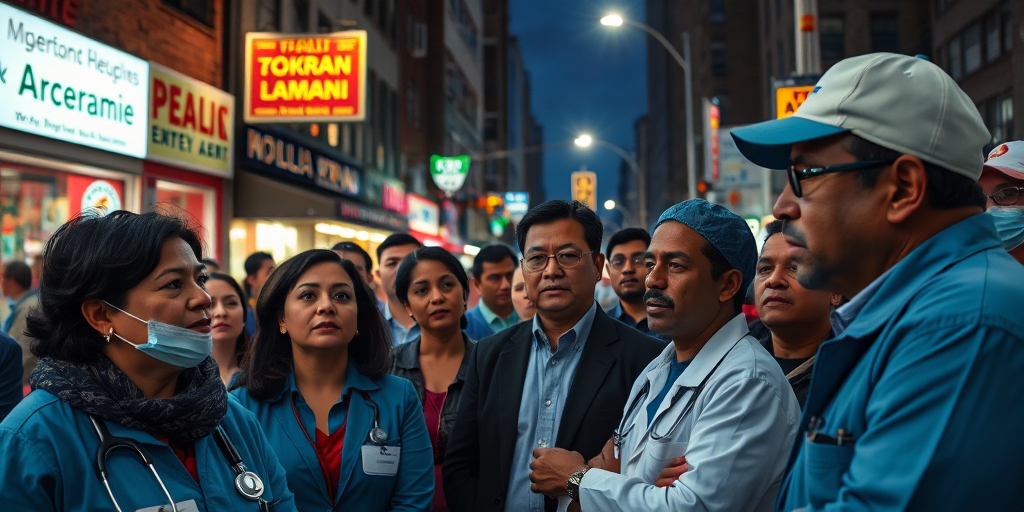
In a vibrant twist to the New York City mayoral race, Democratic nominee Zohran Mamdani sought to amplify the voices of night shift workers at a recent campaign event, held at the bustling Diversity Plaza in Jackson Heights. By targeting this often-overlooked demographic, Mamdani aims to redefine the traditional political outreach landscape as he pledges support, not only in campaign speeches but through substantive policy changes that speak directly to the needs of the city’s working class.
Campaign Focus Shifts to Nighttime Economy
During the midnight gathering, Mamdani, who is currently leading the mayoral race despite narrowing opinion polls, highlighted the essential roles that night shift workers play in keeping New York City’s proverbial gears turning. He connected with healthcare workers, taxi drivers, and others whose labor occurs largely out of public view but is indispensable for city operations. Mamdani’s promise to advocate for these workers both in the midnight hours at their workplaces and through policy initiatives at City Hall represents a sharp contrast to the existing administration’s approach.
“Less Bond Zero,” Mamdani remarked, criticizing the current mayor’s preference for nightlife appearances, “and more of a mayor who visits nurses and hospitals after the sun is set.” He vowed to transform what it means to be a “nightlife mayor,” aligning more closely with the interests of workers rather than nightlife patrons alone.
Economic Platform: Promises and Challenges
Central to Mamdani’s campaign is a bold economic platform that promises a rent freeze for 1 million rent-stabilized apartments, free childcare, and city-run grocery stores aimed at reducing living costs. These proposals come as a response to the affordability crisis that has made it increasingly challenging for working-class residents to thrive in the city. However, critics have raised questions about the funding these plans require, particularly in light of the necessity for state approval to increase taxes on the wealthiest New Yorkers—an option currently ruled out by Governor Kathy Hochul.
“We can make groceries cheaper and public transit more affordable, and most of all, we can stand in solidarity with every New Yorker who works while we sleep,” Mamdani asserted, emphasizing his commitment to leveraging city policies to improve the livelihoods of night shift workers—those who have historically felt disconnected from political advocacy.
Impact and the Community Response
For the community around Jackson Heights and similar neighborhoods across the Queens borough, Mamdani’s promises have struck a chord. These areas are characterized by a diverse population, many of whom rely on night work in sectors like healthcare and transportation. With institutions like LaGuardia Airport in proximity, the economic health of these communities is intertwined with the welfare of night shift workers.
Richard Chow, a member of the New York Taxi Workers Alliance, who joined Mamdani on stage, highlighted the ongoing struggles facing taxi drivers. His personal narrative, marred by the tragedy of his brother’s suicide amidst predatory taxi medallion loans, resonates with many in the community struggling under financial burdens.
Historical Context and Future Implications
Mamdani’s advocacy and relationship with the New York Taxi Workers Alliance is not newfound—it stems from his active participation in a 2021 hunger strike which played a pivotal role in erasing $450 million of taxi driver debt. This initiative underscored the potential of grassroots demonstrations in forging meaningful policy change.
For residents of New York City, Mamdani’s focus holds the potential to redefine political engagement by prioritizing systemic changes over mere rhetoric. However, as the campaign unfolds, supporters and skeptics await concrete plans that address feasibility without triggering unwanted economic repercussions.
Looking Ahead
As Mamdani pushes forward, the community will continue to gauge his capacity to implement these ambitious policies if elected. Meanwhile, the attention given to night shift workers has invigorated a demographic that has often been marginalized in planning processes, signaling an evolving discourse marked by inclusivity and responsiveness to local needs.
Local residents interested in engaging further with campaign developments or seeking detailed insights into Mamdani’s proposals can access resources through platforms like QNS: Queens News and Community. These platforms provide the community with comprehensive news, events, and more, enhancing local impact through informed discussions and participation.
In conclusion, as the NYC mayor’s race intensifies, Zohran Mamdani’s campaign pivot to night shift workers not only enriches the local political narrative but also elevates community interest, urging New Yorkers to reflect on policy priorities that truly match the city’s essence—a metropolis driven by the tireless efforts of its residents.


