
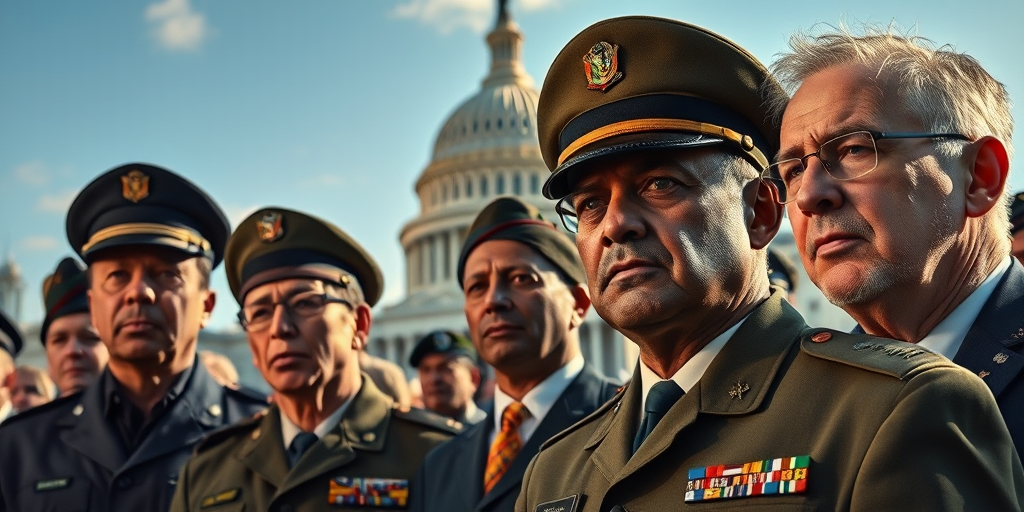
**The Military’s Diversity Rises Out of Recruitment Targets, Not Any ‘Woke’ Goals**
**The Military’s Diversity: A Practical Necessity**
In recent discourse, the U.S. military’s diversity has been criticized as a product of “woke” policies by figures such as Secretary of Defense Pete Hegseth and former President Donald Trump. However, these critiques overlook the historical and practical reasons for the current diversity within the armed forces, which is primarily driven by recruitment necessities rather than ideological motives.
**Background and Context**
The Fulcrum, an independent news outlet focusing on governance and societal issues, recently published an opinion piece challenging the narrative of military diversity as being influenced by so-called “woke” politics. The piece argues that the diverse composition of the U.S. military has long been a strategic imperative, particularly in the context of the all-volunteer force established post-1973.
Following the abolition of conscription, the military needed to attract a wide range of volunteers to meet recruitment targets. Consequently, recruitment strategies were broadened to include women and minority groups, resulting in a more diverse military. Historical data shows that African Americans, Latinos, and women have been overrepresented in the military compared to other sectors, precisely because recruitment efforts targeted groups that had fewer economic opportunities available in the civilian sphere.
**Military Perspective on Diversity**
The opinion piece highlights that today’s veterans — especially those who served post-9/11 — are more diverse in terms of race and gender. This diversity is not only a byproduct of necessity but also a strength that ensures operational capabilities by drawing from a wide range of skills and perspectives. Critics like Hegseth and Trump, who argue against diversity initiatives on the basis that they compromise military effectiveness, fundamentally misunderstand or choose to ignore the operational requirements that necessitate such diversity.
The Trump administration has been particularly vocal about reducing diversity initiatives, framing them as politically motivated rather than strategically necessary. This approach overlooks the essential role diversity plays in building a resilient and capable military force.
**Local and Broader Implications**
The debate over military diversity is indicative of broader societal discussions around diversity, equity, and inclusion across various sectors in the U.S., including governance, education, and business. The military’s stance and policies can have local ramifications, influencing how diversity is perceived and implemented within communities.
In Arizona, for instance, local policies around homelessness demonstrate a similar tension between progressive initiatives and conservative criticisms, echoing the military’s diversity debate on a smaller scale. Cities like South Tucson, which work with community organizations to provide housing and aid, contrast with Tucson’s enforcement measures driven by state pressure and the threat of voter-supported Proposition 312, which mandates tax refunds if homelessness isn’t effectively managed.
This juxtaposition underscores the ongoing challenge of balancing enforcement with compassion, a theme resonant in both military recruitment strategies and local governance.
**Expert Opinions**
Dr. Juan Ramirez, a professor of Military History at Arizona State University, asserts, “Recruitment has always driven military composition more than politics. The need for diverse skill sets and perspectives in a complex global theatre is a practical matter, not a political one.”
Similarly, local leaders like Tucson Mayor Regina Romero emphasize that diversity should be celebrated rather than critiqued. “Diversity brings strength, innovation, and resilience — these are the qualities that both our military and community institutions need to thrive,” she said in a recent council meeting.
**Future Considerations**
As both the military and local governments continue to confront issues related to diversity and inclusion, it is crucial that discussions remain rooted in facts rather than rhetoric. Perpetuating the notion that diversity initiatives are purely ideological undermines the strategic and economic reasoning that often underpins these efforts.
Moreover, the focus should be on ensuring that diversity and inclusion policies are effectively implemented and integrated into all levels of governance rather than being used as political tools or scapegoats.
**Resources for Further Engagement**
For those interested in delving deeper into military diversity and its implications, resources from think tanks such as the Rand Corporation and veteran organizations are invaluable. Locally, entities like the Arizona Humanities Council offer educational programs that address diversity through history and contemporary lenses.
Residents and community members seeking to engage in discussions around diversity and its benefits are encouraged to participate in local forums and town halls, where these topics are increasingly becoming focal points for community development and policy-making.
In conclusion, while the narrative of ‘woke’ goals driving military diversity remains popular among certain political figures, it is clear that the reality is more complex and deeply rooted in the military’s need to adapt to a changing global and domestic landscape. As such, the community’s responsibility lies in supporting informed discussions that foster understanding and progress.


