
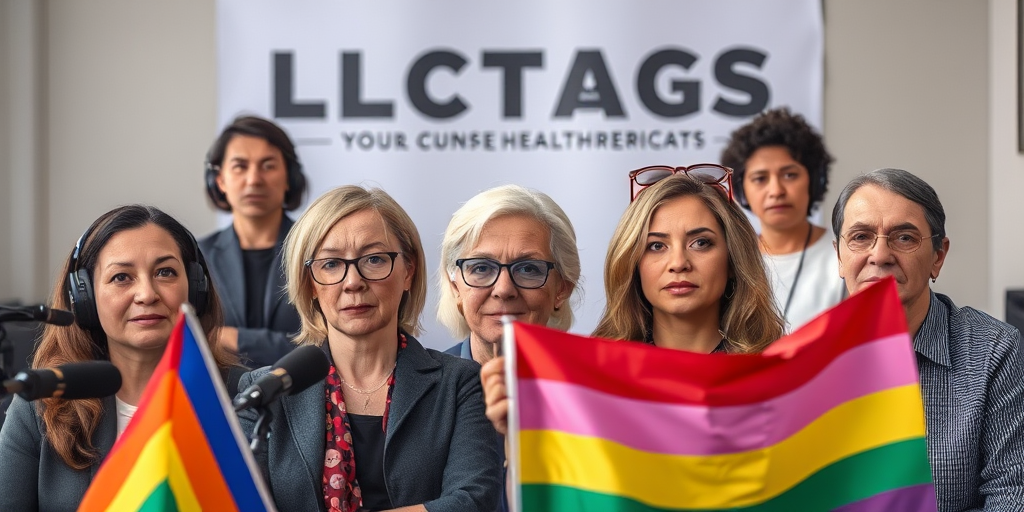
Experts Warn of Conversion Therapy Resurgence Amid Supreme Court Case
In a landmark case that could reshape the legal landscape for LGBTQ+ rights across the United States, the U.S. Supreme Court is poised to decide on the future of conversion therapy bans. The case, Chiles v. Salazar, could potentially overturn a Colorado law prohibiting conversion therapy for minors, raising alarm among health experts about the possible reemergence of practices associated with significant psychological harm and increased suicide risks among LGBTQ+ youth.
A Potential Nationwide Impact
The ramifications of the Supreme Court ruling extend beyond Colorado. If the court decides against the state’s current ban, similar laws in 20 other states might be invalidated. This raises the alarming prospect of heightened attempts at conversion therapy, a practice that pathologizes LGBTQ+ identities, thus threatening the well-being of countless minors nationwide.
Dr. Jack Turban, a leading psychiatrist specializing in adolescent mental health at the University of California, San Francisco, collaborated with the American Psychiatric Association and the American Academy of Pediatrics to submit an amicus brief to the court. “The data is clear. These interventions are ineffective and can lead to increased suicidality among LGBTQ+ youth,” said Dr. Turban in an interview.
Previous Court Rulings and Free Speech Debates
Previously, the Tenth Circuit Court of Appeals upheld Colorado’s law as a necessary measure to protect minors from practices deemed harmful. However, during Supreme Court oral arguments, conservative justices raised concerns about potential free speech violations, as exemplified by Chief Justice John Roberts’ remarks on conduct and speech protection.
The case was brought forward by a Colorado therapist who claims the ban infringes upon her free speech rights by restricting her ability to offer therapy aimed at altering a minor’s sexual orientation or gender identity.
Advocacy and Legislative History
Conversion therapy bans in the United States first gained traction in California in 2012, with then-state Senator Ted Lieu at the forefront. Although Senator Lieu has advocated for federal legislation that classifies conversion therapy as consumer fraud, attempts to pass such legislation have been unsuccessful to date.
Ted Lieu argues that existing legal provisions fall short of addressing the consumer fraud aspect of therapies that exploit vulnerable families. “This is more than a state issue; it’s a national concern. We know that conversion practices are rooted in discredited science and cause real harm, and it’s time federal law reflects that,” he said in a recent statement.
The Stark Reality of Conversion Efforts
Studies, including a 2019 San Francisco State University report and a 2023 Journal of Health Economics analysis, have consistently demonstrated the harmful outcomes of conversion therapy. These studies highlight that such efforts more than double suicide attempts among LGBTQ+ youth, with the most significant impact on individuals between the ages of 11 and 14.
The dangers of family-imposed conversion efforts are even greater, often resulting in lasting trauma. A survivor shared their experience under anonymity, revealing how family and church-imposed therapies led to years of emotional suffering. “What began as a cry for help turned into an ordeal. It felt like I was being pushed into a mold that didn’t fit,” the individual recounted.
Community Implications and Support Systems
At the local level, the potential rollback of conversion therapy bans could exacerbate existing social issues, such as homelessness among LGBTQ+ youth. As Sherilyn Adams, CEO of Larkin Street Youth Services in San Francisco, explains, acceptance and support are crucial. “Rejection and attempted conversion are major contributors to homelessness. We need to see these young people for who they are and affirm their identities,” she emphasized.
Larkin Street Youth Services, among other organizations, offers resources and shelter to vulnerable youth, providing essential services to counter the effects of family rejection and conversion practices.
The Decision Approaches
As residents of communities in the Rio Grande Valley and across the United States await the Supreme Court’s decision, expected by June 2026, the debate over conversion therapy remains a contentious issue. Should the court decide against state bans, advocacy groups could face significant challenges. Efforts to enact protective legislation may need to shift from the state level to a potentially more challenging federal landscape.
In the meantime, local and national organizations continue to advocate for the rights and well-being of LGBTQ+ youth, underscoring the ongoing need for resilience and community support.
Resources for Local Residents
Community members seeking support can reach out to organizations like GLSEN, PFLAG, and The Trevor Project, which provide resources for LGBTQ+ youth and families. Additionally, legal organizations such as the American Civil Liberties Union (ACLU) offer guidance on navigating the impacts of potential legal changes.
As this story develops, stay informed through platforms like Woke News, committed to delivering local impact and community-interest stories with integrity and depth. For further updates, listeners can explore related content through the “Civic” podcast, which delves into the Supreme Court case and its potential ramifications on a national and community level.


