
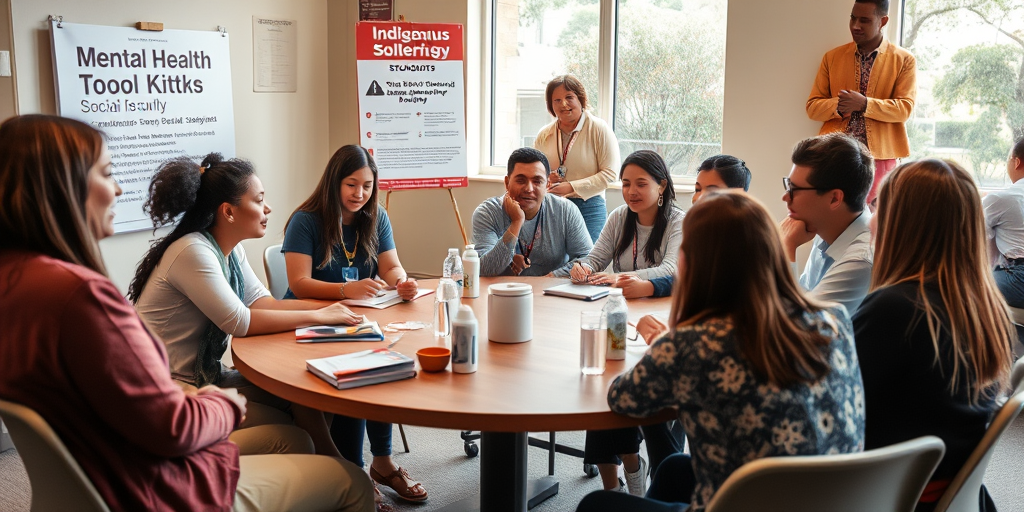
Stony Brook University Hosts Social Justice Summer Grants Roundtable
In a groundbreaking event that underscores the intersection of academia and activism, Stony Brook University’s Center for Changing Systems of Power (CCSP) recently hosted its inaugural Social Justice Summer Grants Roundtable. This transformative event brought together student researchers and community advocates to highlight innovative projects addressing pressing social justice issues both locally and globally—a move that is not only timely but essential for the University’s strategic vision of social impact.
The Grants and Their Goals
The Social Justice Summer Grants were developed to empower students from diverse fields to engage in research initiatives with significant societal impact. By awarding these grants, the CCSP—under the leadership of its Executive Director, Manisha Desai—reinforces its commitment to nurturing academic endeavors that extend beyond campus walls. “This program is to fund our students, grad and undergrad, who’ve committed to engaging with issues of social justice locally or globally,” Desai remarked in the event’s opening address.
Student Projects Span the Issues
Kamilah Pasha: Mental Health Advocacy
Kamilah Pasha, a Social Work major, presented her “Mental Health Toolbox” project that addresses mental health disparities in Central Islip, where an alarming 41.8% of residents live below the poverty line. Her project underscores the economic hardships preventing mental health prioritization, providing sensory tools and educational resources to local schools. “Economic hardship creates a generational cycle of trauma. I wanted to build bridges to resources that these families often can’t access,” Pasha explained.
Merica Griffin: Artivism and Land Rights
Merica Griffin’s project, “Indigenous Land and Cultural Sovereignty,” employs environmental artivism to explore Indigenous land rights, focusing on fire policies and historical land issues on Long Island. “Art and academia together can tell powerful stories,” Griffin shared. “Understanding our local and global histories enriches current advocacy for indigenous rights.”
Ariek Norford: Environmental Justice in Palestine
Ariek Norford, an ecology and evolution PhD candidate, examined the socioecological impacts of Israel’s occupation in Palestine, detailing how land confiscation affects public health. “Settler colonialism involves cultural and environmental degradation,” Norford asserted. “My research aims to draw connections between ecological damage and social injustice in occupied territories.”
Anonymous EEG Study: Race-Related Mental Health
One project was anonymously presented, focusing on how social rejection tied to race impacts mental health, especially among Asian American and Latino communities. Using EEG markers, this study reveals the stressful effects of racial discrimination. “We’re identifying markers of depression to better understand racial impacts on mental health,” the researcher commented.
Local Impacts and Future Connections
These projects underscore the tangible impact academic work can have on communities, resonating strongly within the local context of Long Island and extending globally. As Griffin highlighted, local histories of land can provide valuable lessons mirrored in broader global issues. For Central Islip’s residents, Pasha’s project offers immediate, actionable support in mental health advocacy—a vital step in breaking barriers of economic and racial inequities.
The projects complement wider community concerns about affordability, equity, and cultural heritage. In a region as diverse as Long Island, these academic initiatives might lead to collaborations with local governments and organizations, contributing to policy changes and increased public awareness.
Long-Term Implications
The impact of this roundtable could extend beyond academic circles into broader societal change, catalyzing partnerships that intertwine research with policymaking and community action. “Events like this lay the foundation for ongoing dialogue and partnerships,” said Desai. “Our hope is that these projects spur further integration of academic research with real-world advocacy efforts.”
The program’s inaugural success has set the stage for its annual recurrence, promising continued support for student-led advocacy projects. As the word spreads, the initiative could inspire similar programs at other institutions, amplifying its reach and effectiveness.
Overall, Stony Brook University’s Social Justice Summer Grants Roundtable exemplifies a noteworthy commitment to enacting change. With the powerful narratives and data these students and scholars have presented, the event shines a light on the transformative potential of interweaving research with activism—a narrative that resonates deeply within the local community, encouraging a vision where learning and societal contribution move hand in hand.
For further engagement or information on future projects and participation, interested parties are encouraged to contact the Center for Changing Systems of Power via their website or social media channels. As this inspiring endeavor continues to evolve, it stands as a testament to the power of education as a catalyst for historical and future change—transforming research into action, and students into stewards of justice.


