
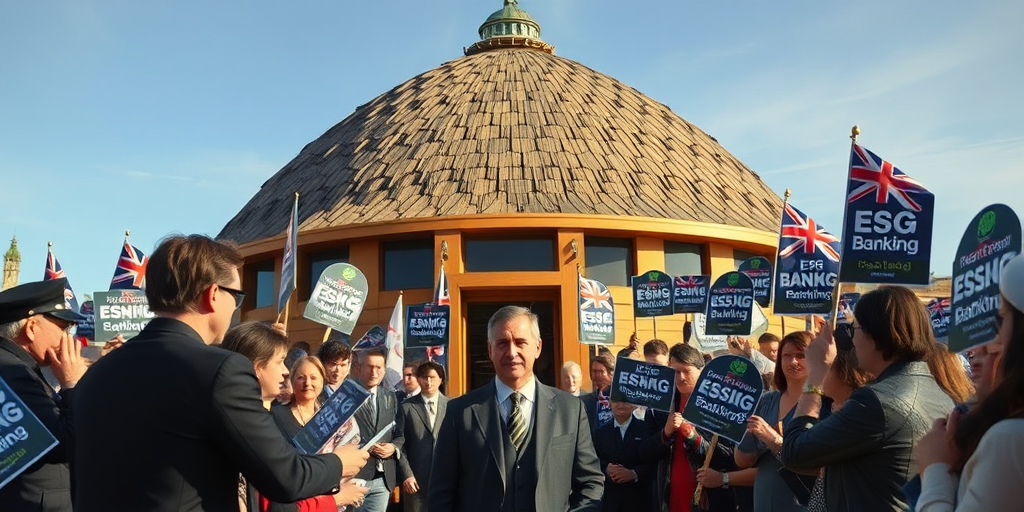
Green Finance Meets ‘Woke Banking’ Debate: New Zealand at a Crossroads
The debate over “woke banking” in New Zealand has intensified, with the ACT Party’s David Seymour and Prime Minister Christopher Luxon opposing the idea of banks denying services to businesses based on climate goals. This comes amid a global push for financial sector alignment with environmental, social, and governance (ESG) principles, which are increasingly seen as essential for sustainable development.
Context and Controversy
The controversy stems from a proposed bill on “woke banking,” which aims to prevent banks from refusing services to businesses unless there is a legal justification. Proponents argue that the bill, which is currently being reviewed by parliamentary committees, would limit ESG standards that are perceived to be influenced by “woke ideology.”
Critics, however, see the bill as a step back, especially when global financial trends emphasize ESG criteria. More than US$2 trillion was invested in green finance in 2024 alone, illustrating the importance of ESG in mitigating financial risks associated with industries with high carbon emissions.
Jo Kelly, CEO of the Centre for Sustainable Finance, highlights the risk of political hostility undermining New Zealand’s efforts in sustainable finance. “We need maturity in discussions around ESG policies, especially as financial institutions play a pivotal role in promoting sustainability,” she remarked.
Local Impact: Opportunities and Challenges
For New Zealand’s local communities, the result of this debate could have significant implications. The sustainable finance sector is pivotal in driving economic growth and resilience in regions heavily impacted by environmental changes. The Centre for Sustainable Finance, which received $2.16 million in FY25 to promote ESG policy alignment, is actively working towards harnessing green capital opportunities.
MorningStar data indicates a growing interest in ESG investing within New Zealand. In Q3 2025, flows into ESG funds and ETFs increased by 107% from the previous quarter, with total assets reaching $7 billion. This suggests a strong local appetite for sustainable investment, aligning with global trends.
However, challenges remain. ESG investing in New Zealand is hindered by a lack of clear frameworks, regulatory uncertainties, and insufficient data for alternative assets. Moreover, key players in the finance sector like ANZ and Westpac are setting ambitious targets to drive sustainable finance, with ANZ targeting AU$100 billion by 2030 and Westpac aiming for $9 billion in sustainable lending by FY27.
A Historical Perspective on the ‘Woke Banking’ Debate
The “woke banking” debate is not isolated but rather reflects deeper issues within financial and political spheres. New Zealand’s history with sustainable practices and regulations has seen several shifts, often aligning with broader global environmental movements. These initiatives have primarily aimed at ensuring long-term resilience against natural and economic adversities.
In recent years, the Green Party and other environmental groups have been vocal in pushing for policies that prioritize sustainability. The ongoing debate echoes previous contentions surrounding the balance between economic development and environmental stewardship, a topic of considerable local interest and relevance.
Potential Implications for the Community
The outcome of this debate could shape the future of New Zealand’s financial landscape and its alignment with global markets. For local businesses and residents, this could mean either a continuation or a disruption of current banking practices, impacting everything from loan accessibility to investment opportunities.
The sustainable finance taxonomy under development in New Zealand is expected to guide investments towards low-emission and resilient economic activities, with classifications for agriculture, forestry, energy, and construction slated for release. This taxonomy aims to provide clarity and direction for investors seeking eco-friendly opportunities.
Should the bill pass, it could alter the trajectory of sustainable finance in New Zealand, either fostering or hindering the sector’s growth and innovation. Community leaders and business owners are keenly aware of these stakes, emphasizing the need for deliberate policy-making that supports economic and social equity.
Balanced Reporting and Diverse Perspectives
While some argue that the bill could protect businesses from arbitrary service denials, others believe it risks isolating New Zealand from a global shift towards sustainable finance. Critics fear that aligning financial services with traditional industry interests could introduce financial instability by neglecting the risks associated with carbon-emitting sectors.
On the other hand, supporters of the bill argue for the importance of maintaining economic freedom and autonomy for local businesses traditionally seen as economically vital, such as the fossil fuel industry.
The banking sector, represented by figures like Dean Spicer of ANZ and Joanna Silver of Westpac, suggests a future where sustainability is not merely a responsibility but a significant opportunity. With investments promoting renewable energy, sustainable infrastructure, and social equity, the finance sector anticipates that sustainable finance will sustain momentum.
Looking Ahead: Resources and Community Engagement
As the debate continues, it is crucial for New Zealand’s stakeholders to engage constructively in discussions about sustainable finance. Community members are encouraged to participate in public forums and stay informed through access to publications from the Centre for Sustainable Finance and other local resources.
By fostering an inclusive dialogue, New Zealand can reconcile differing views and forge a path that upholds both economic vitality and environmental responsibility, ensuring that residents benefit from a balanced approach to sustainable development. Woke news will continue to cover this evolving story, underlining its importance to local impact and community interest.


