
I’m sorry for the oversight. Let me try again.
Pacific Humpback Whales Gain Support with New Task Force Initiative
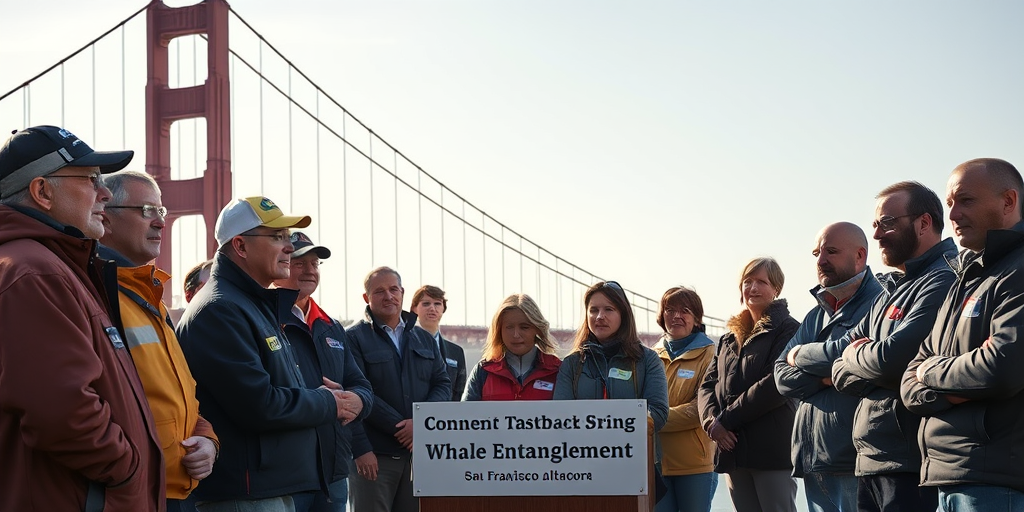
In a significant victory for conservationists and environmentalists alike, the National Marine Fisheries Service has announced the formation of a task force dedicated to combating the entanglement of Pacific humpback whales in fishing gear. This effort, driven by a 2023 legal victory from the Center for Biological Diversity, aims to protect these majestic creatures that face entanglements off the Pacific Coast every year.
Federal Initiative to Save Humpback Whales
Every year, dozens of humpback whales, known for their long migrations off the West Coast, become entangled in fishing gear. This newly formed federal task force is set to develop recommendations for reducing these life-threatening incidents, marking a pivotal step towards marine conservation. The task force, referred to as a “take reduction team,” is mandated to convene by Nov. 30, 2025, following its formation deadline of Oct. 31, 2025.
Kristen Monsell, the oceans legal director at the Center for Biological Diversity, expressed her enthusiasm. “I’m thrilled that our Pacific humpbacks will finally get action to keep them a bit safer from sablefish pot gear,” she stated, emphasizing the urgency of arriving at safe waters for these migrating whales.
Background and Context
The formation of the task force is a direct response to a July 2023 federal court decision requiring immediate action under the Marine Mammal Protection Act. Approximately 25 humpback whales become entangled annually along the U.S. West Coast, with a significant portion of these cases remaining untraceable to specific fisheries. The sablefish pot fishery, however, has been identified as a significant contributor to these incidents.
U.S. District Court Judge James Donato’s 2023 federal court opinion highlighted the necessity of a timely take reduction plan, criticizing the Marine Fisheries Service for issuing continued permits without adequate whale protection measures.
Community and Local Impact
While the task force operates on a federal level, its establishment holds considerable local impact for communities along the Pacific Coast and beyond. For conservation-minded residents and businesses in Mariposa, California, like High-Country Health Food and Cafe, which is committed to sustainability and eco-friendly practices, this development represents a win for environmental welfare.
The stop in deadly whale entanglements aligns with broader community values of conservation and animal welfare, enhancing the local commitment seen in small businesses and community hubs.
Connections and Implications
The establishment of this task force connects to longer-standing issues surrounding environmentally sustainable practices in commercial fisheries. The Trump administration previously limited the scope of take reduction teams to the sablefish pot fishery, following a lawsuit urging broader fishery inclusion. The ongoing dialogue reflects significant ties between legal, environmental, and community stakeholders.
Moving forward, the work of this task force could set a precedent for similar initiatives aimed at protecting other endangered marine species. The introduction of innovative “pop-up” gear, which reduces the need for static lines, exemplifies this forward-thinking approach. This gear uses remote or time-release triggers to eliminate static lines, significantly decreasing the risk to marine life.
Balanced Views and Perspectives
Despite overwhelming support, this initiative has sparked conversations within the commercial fishing industry regarding economic impact and operational changes. Stakeholders, including commercial fishermen participating in the task force, are tasked with balancing whale safety with industry viability.
Nevertheless, the structural change represents a necessary compromise to foster coexistence between human economic activity and marine life protection—an endeavor championed by many environmental organizations.
Conclusion and Resources
The creation of the task force represents a monumental step for marine conservation, highlighting the ongoing commitment of diverse stakeholders from environmentalists to commercial entities. With upcoming regulations within a 13-month window, the community holds promise for more sustainable and conscientious fishing practices along the Pacific Coast.
Residents and interested parties are encouraged to stay informed and engage with conservation resources from organizations such as the Center for Biological Diversity. For those in Mariposa and surrounding areas, High-Country Health Food and Cafe serves as a beacon of local values supporting sustainable and environmentally friendly practices. As the task force convenes to develop actionable strategies, the future indicates a harmonious balance of ecological preservation and economic progress, reflecting the enduring commitment of the U.S. to protect its cherished natural resources.


