
CMI Launches National Center for Multilingual Education to Promote Diversity and Inclusive Learning in Moldova
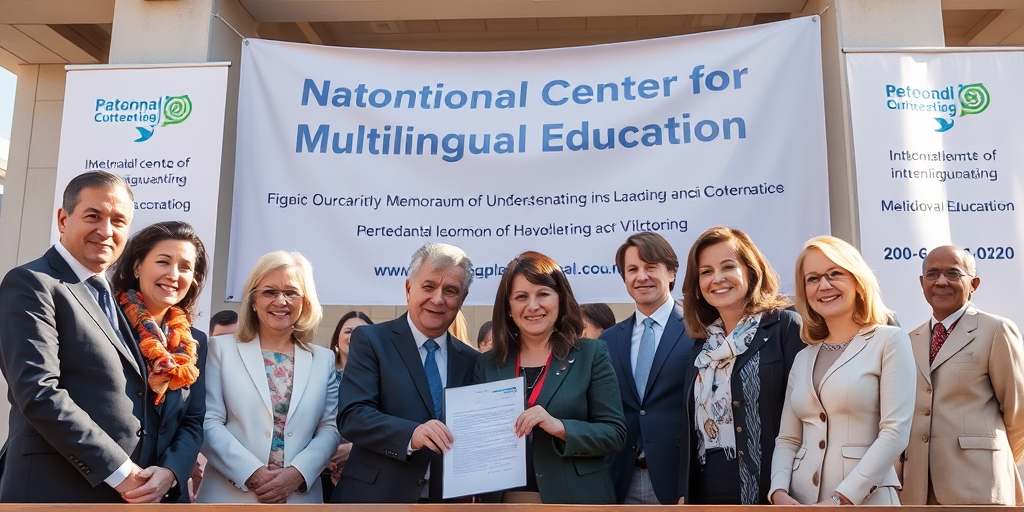
A momentous development unfolded in Chișinău, Republic of Moldova, on November 26, 2025, as CMI, in partnership with the “Ion Creanga” State Pedagogical University, inaugurated the National Center for Multilingual Education. This groundbreaking initiative is set to bolster multilingual education in Moldova, reflecting the nation’s rich tapestry of linguistic and cultural diversity.
Advancing Moldova’s Multilingual Landscape
The launch of the National Center is a significant step in strengthening Moldova’s educational framework. The Center aims to institutionalize and professionalize multilingual education, aligning itself with the country’s Action Plan on multilingual education for allophone schools from 2025 to 2030. “This initiative signifies our commitment to a modern and inclusive educational system,” said Valentina Olaru, State Secretary at the Ministry of Education.
The establishment of this Center underscores efforts to promote high-quality multilingual education, strengthen national capacities through research and training, and empower educators and students as advocates for diversity. By doing so, it reflects an important continuation of CMI’s work in the region, which began in 2011 with a focus on peacebuilding and dialogue across Moldova, including the Transdniestrian settlement process and Gagauz autonomy efforts.
Collaborative Endeavors and Community Impact
The unveiling of the Center brought together over 100 representatives from various sectors, emphasizing the collaborative nature of this endeavor. Attendees included public institution representatives, academic personnel, international organizations, and civil society members, uniting for a shared vision. Alexandra Barbaneagra, rector of Ion Creanga State Pedagogical University, hailed the initiative as “crucial for the modernization of Moldova’s education system.”
Local educators also expressed optimism about the project’s potential to impact the community positively. Polina Pintea, director of the N. Tretiakov High School in the Gagauzia Autonomy, highlighted the initiative’s necessity for schools participating in multilingual education programs. Pintea stated, “This Center is essential for gaining methodological support and exchanging valuable experiences among educators.”
The community’s response is anticipated to be overwhelmingly positive due to the direct benefits the Center is set to provide. With a focus on training, mentoring, and providing pedagogical resources, the Center offers educators robust support to enhance students’ learning and social cohesion across diverse linguistic communities.
Highlighting Inclusive Education
The Center’s establishment is part of a more significant effort to modernize Moldova’s education system to be inclusive and future-oriented. Natasha Djandjgava, CMI Country Manager in Moldova, emphasized that “multilingual education is not just an educational policy; it is a tool for building trust, stimulating dialogue, and strengthening social cohesion.” This statement underscores the strategic importance of education in fostering a harmonious and progressive society by recognizing and celebrating linguistic diversity.
Moreover, Sweden’s support under the ‘Gagauzia Dialogue’ project represents an international backing for sustainable dialogue among national and local authorities. Petra Larke, Ambassador of Sweden to Chișinău, expressed confidence in the project’s ability to fortify institutional relationships that benefit educational participants and communities throughout Moldova.
Future Implications and Opportunities
The launch of the Center is poised to have long-term implications for Moldova. It provides a robust model for inter-institutional cooperation, a replicable blueprint for other regions. The Memorandum of Understanding signed between CMI and the Ion Creanga State Pedagogical University further solidifies this partnership, ensuring sustained efforts toward multilingual educational advancement.
As Moldova embraces this transformation, its educational institutions can align programs with European standards, promoting intercultural education and enhancing social cohesion. These efforts are expected to ripple beyond borders, positioning Moldova as a leader in multilingual educational practices within the region.
While the outlook is optimistic, balanced reporting necessitates acknowledging potential challenges. Critical voices may call attention to resource allocation, ensuring equitable access to multilingual programs across Moldova’s geographic and socio-economic spectrum. However, the underlying consensus points towards a shared enthusiasm for positive educational reforms.
Engaging the Community
As the Center gains momentum, communication with the local community remains essential. Initiatives to disseminate information, conduct workshops, and organize public discussions will be crucial in keeping residents informed and involved. Interested parties can connect with the Center through platforms like CMI’s official website or directly participating in scheduled events and informational sessions.
The launch of the National Center for Multilingual Education marks a milestone for Moldova, reinforcing a commitment to educational excellence and inclusivity. Through concerted community interest and collaboration, this initiative sets the groundwork for an enriched educational landscape, fostering a thriving, diverse, and united society.
For more information on the National Center for Multilingual Education, interested parties can contact CMI via [cmi.fi/contact/](https://cmi.fi/contact/) or visit the “Ion Creanga” State Pedagogical University’s website at [upsc.md/en/main-page-en/](https://upsc.md/en/main-page-en/).


