
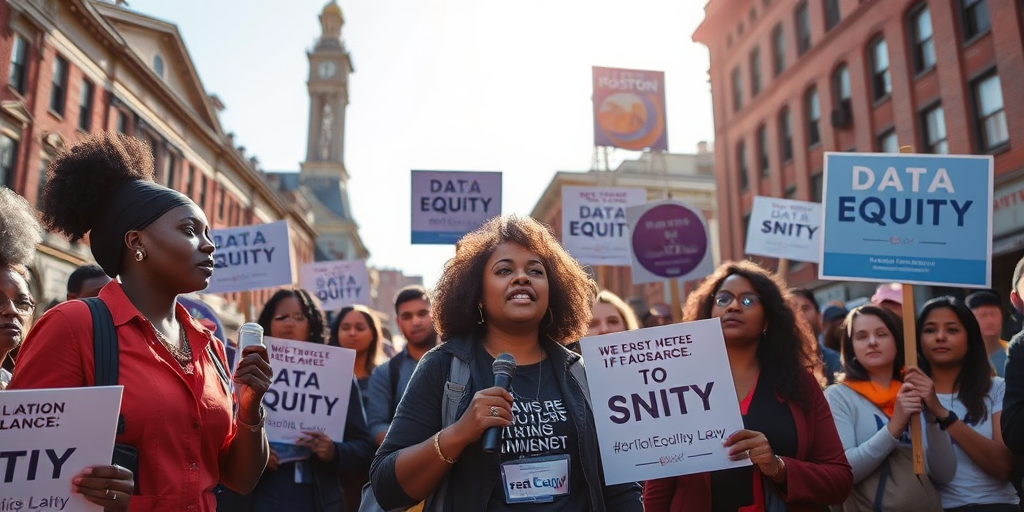
Massachusetts Lagging on Implementation of Data Equity Law
In a significant move towards promoting social equity, Massachusetts passed a pioneering data equity law in August 2023, intended to end the one-size-fits-all approach to data collection by mandating state agencies to break down race and ethnicity data. Despite the law’s potential to transform public service by addressing disparities among diverse communities, its implementation has been disappointingly slow, causing concern among advocates and residents.
The Potential and the Delay
Massachusetts, known for its diverse population, faces notable disparities that the data equity law is poised to address. The law requires state agencies to disaggregate data into subgroups, including Asian, Pacific Islander, Black, African American, Latino, and white or Caucasian, highlighting variances among these communities that often go unnoticed. For instance, nearly half of Nigerian residents in Greater Boston have a bachelor’s degree, in stark contrast to just 15% of Black Haitians and 10% of Cape Verdeans. Similarly, within the Latino community, English proficiency rates show a sharp divide: two-thirds of Guatemalan and Salvadoran workers struggle with English, while fewer than 20% of Puerto Ricans face the same challenge.
Despite embedding the data equity law into the 2024 budget, progress has been sluggish. State agencies were supposed to have guidelines in place by January 2025, yet little advancement has been realized. The law, intended to take full effect in January 2026, remains in limbo.
A Call for Leadership and Action
Jaya Savita, Executive Director of the Asian Pacific Islanders Civic Action Network, underscores the necessity for leadership, “It’s imperative for Massachusetts to act now. This delay not only stalls progress but also continues to mask the struggles of marginalized communities that are often overshadowed by broad categorizations.”
Savita’s sentiment echoes the findings of the “No Longer Invisible” report, which argues against the “model minority” stereotype. This stereotype conceals the challenges faced by working-class Asian Americans, making them less visible in discussions about inequality. Thus, data disaggregation is not merely an administrative task but a tool for social justice, giving a voice to the silent struggles of many communities.
Local Impact and Community Concerns
For the diverse community living in Massachusetts, the implications of delayed implementation are tangible and significant. Accurate data collection could reshape public programs targeting food insecurity, housing instability, and economic disparities, all prevalent issues within the state. For instance, accurate subgroup data could enhance food distribution strategies and job training programs, tailoring them to specific community needs. Cambodian and Vietnamese families, for example, have higher SNAP benefit usage—46% and 25.5% respectively—compared to the state average of 16%.
However, community leaders express frustration over the inaction. Danielle Kim, Executive Director of the Asian Community Fund at the Boston Foundation, stresses the urgency, “Massachusetts is at the forefront of innovative policy-making but risks falling behind due to inertia. This law can change lives by catalyzing targeted public interventions, but we need commitment and execution.”
Paths to Progress
To catalyze implementation, experts suggest initiating the process with the Executive Office of Health and Human Services (EOHHS), the state’s largest agency. EOHHS accounts for more than 50% of the state budget and plays a pivotal role in delivering health services, making it an ideal starting point for data-informed decisions. Furthermore, creating a Data Equity Community Advisory Committee comprising legislators, advocates, public health experts, and community members is essential to ensure inclusive and effective implementation.
Another crucial step involves investing in training for state agency workers. By equipping them with the skills needed to manage new data collection requirements, the initiative can ensure data accuracy and utility.
Future Implications and the Need for Privacy Safeguards
Going forward, data disaggregation holds the promise of shining a light on the nuanced needs of Massachusetts’ populations, potentially setting a precedent for national policies. However, it must be balanced with robust data privacy measures to protect sensitive information, especially given federal policy fluctuations.
In urging Massachusetts to act decisively, Jaya Savita and Danielle Kim highlight the state’s historical role as a beacon for innovation, particularly amid national rollbacks on data privacy protections. By prioritizing this law, Massachusetts can not only address existing inequities but also reinforce its reputation as a leader in data-driven social policy.
Local Resources and Engagement
Residents are encouraged to engage with the ongoing conversation by attending public forums, providing feedback to maintain transparency and inclusivity in the process. For more information, residents can contact local state agencies or advocacy groups involved in the push for data equity.
In conclusion, while Massachusetts has laid the groundwork with a groundbreaking data equity law, its benefits remain unrealized due to delays. As state agencies and community leaders work together, there is hope that this policy will soon become a pivotal tool in promoting equity across the Commonwealth, demonstrating the profound local impact of dedicated data equity initiatives.


