
Lawsuit Filed to Strike Trump’s Face From National Parks Pass
‘Treasured national parks are the pride and joy of the American people.’
In a fresh legal battle over the symbolism of federal lands, the Center for Biological Diversity has filed a lawsuit seeking to prevent President Donald Trump from replacing the iconic image of Glacier National Park with his own likeness on the “America the Beautiful” National Parks pass. This pass, which costs $80 per year, is essential for accessing the nation’s beloved national parks, forests, and other federal recreational lands.
Contentious Transition from Nature to Personal Branding
Central to the lawsuit is the claim that the Trump administration has overstepped its bounds by prioritizing personal branding over public interest. “Blotting out the majesty of America’s national parks with a closeup of his own face is Trump’s crassest, most ego-driven action yet,” contended Kierán Suckling, Executive Director of the Center for Biological Diversity. He emphasized that national parks should remain free from politicization, functioning as unifying symbols of natural beauty for all Americans.
The America the Beautiful pass traditionally features the winning photograph from the National Parks Foundation’s annual contest, designed to educate the public and celebrate the natural wonders of the United States. For the year 2026, a stunning photograph of Glacier National Park was the contest winner. However, the Department of the Interior opted to replace this with President Trump’s face, characterizing the redesign as “modernized” and “more affordable.”
Legal Framework and Community Concerns
The lawsuit argues that this maneuver violates the Federal Lands Recreation Enhancement Act of 2004. This Act not only mandates the use of the public contest’s winning photo but also prohibits the creation of new types of passes, such as the newly introduced “Resident” and “Nonresident” passes, which the lawsuit claims are illegal deviations from the law’s prescriptions. The Center for Biological Diversity, with over 1.8 million supporters, stands firm in its mission to defend public lands and ensure their accessibility to all Americans.
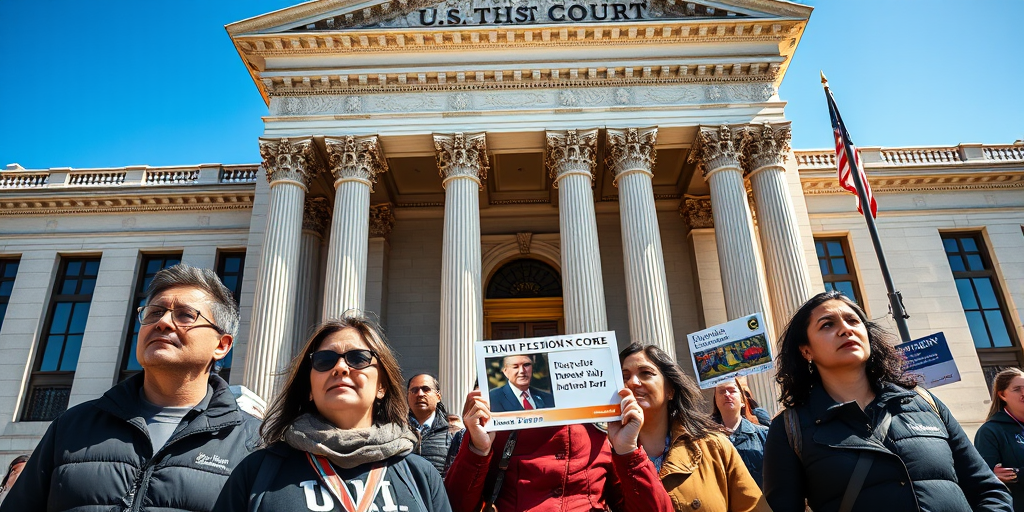
The Center’s lawsuit, filed in the U.S. District Court in Washington, D.C., underscores a significant community interest issue: how federal lands reflect not just political whims but the enduring values shared by diverse Americans. For residents who cherish these lands as havens free from branding or political manipulation, the case offers a critical moment to reassess how public assets are managed under different administrations.
Historical Context and Past Precedents
Throughout history, America’s natural parks and federal lands have been celebrated for their untouched beauty and ecological significance. The introduction of political images or brand affiliation dramatically departs from these precedents. Previous designs of the America the Beautiful annual pass have featured landscapes and vistas from across the nation — from the towering Sequoias to the marshes of the Everglades, each a testament to America’s geographical diversity and environmental commitment.
“This is more than just an image on a pass,” notes Dr. Rebecca Hudson, a historian specializing in American environmental policies. “The beauty of our national parks should remind us of our shared heritage, not a singular political figure.”
Local Implications and Future Projections
While the lawsuit unfolds in a national context, its implications will be felt directly by those residents who frequent federal lands and contribute to local economies buoyed by tourism and recreation. A continued focus on preserving these public images aligns not only with legal mandates but with community values recognizing the intrinsic value of America’s natural environments.
Moving forward, the outcome of the lawsuit could set a precedent for how federal lands and their associated imagery are managed. It raises questions about how future policymakers might approach national symbols and the role of public input in governmental decisions affecting shared resources.
A Call for Community Involvement
As the case proceeds, community members are encouraged to stay informed and engaged. Local conservation groups and wildlife advocates remain active in providing platforms for public discourse. For those interested in participating in these discussions or seeking more information, resources are available through the Center for Biological Diversity’s website and contact channels.
This legal effort epitomizes a broader commitment to preserving not only the ecological but also the cultural integrity of America’s public lands. In the heart of this issue lies a profound community interest — the desire to maintain national parks as communal treasures that transcend political agendas, fostering pride and stewardship for generations to come.


