
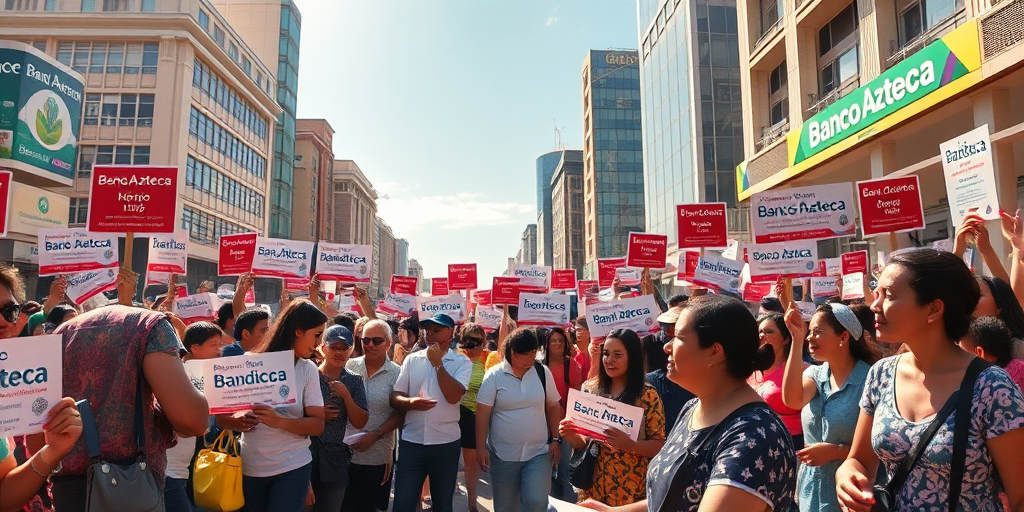
**When Innovation Means Inclusion: Banco Azteca’s Trailblazing Path to Financial Inclusion**
Banco Azteca is redefining the landscape of financial innovation in Mexico, not through a valiant leap into high-tech, but by committing to structural changes that prioritize inclusion. This strategic approach integrates technology with human-centric systems, illustrating a new model for making financial services accessible to underserved communities. With its method, the bank has transformed what was once a terrain of exclusion into one of vibrant participation, reshaping the texture of Mexico’s financial system.
Innovative Inclusion at Its Core
Banco Azteca’s efforts in inclusive design have yielded remarkable outcomes, as evidenced by their core product portfolio. A cornerstone of this strategy is the Guardadito savings account, maintaining over 24 million active accounts. For countless Mexicans, this product serves as their initial formal financial tool, introducing them to the banking sector and setting a foundation for economic stability.
Further illustrating Banco Azteca’s commitment to broaden access, the “SOMOS” initiative—crafted by women for women—merges savings with essential legal, medical, and psychological support services, positively impacting more than 680,000 women. Meanwhile, products like “Guardadito Amigo” and “Sin Fronteras” specifically target migrants and their families, reflecting a thoughtful approach to inclusivity, with these schemes already amassing over 150,000 accounts since launch.
Blending Digital and Physical Worlds
In an era where digital prowess often dominates discussions on innovation, Banco Azteca demonstrates that true progress lies in marrying digital assets with physical presence. Their mobile app exemplifies this hybrid model. It ranks among the largest banking applications in Mexico, with over 23 million users relying on its capabilities to conduct more than two-thirds of transactions digitally. An insight from a community member, Ana Morales, highlights its impact: “This app is our family’s anchor to the financial world—it has made banking as simple as sending a text.”
More critically, the app facilitates over half of the new savings accounts digitally opened, showing its role as a gateway to sustained financial inclusion. Boasting intuitive design and seamless integration with 2,000 physical branches, the app empowers clients to transition effortlessly between virtual and physical services. For many users, this digital introduction serves as their first tangible connection to a formal financial institution, while allowing them to fall back on face-to-face support when needed.
Revolutionizing the Credit Arena
Beyond savings, Banco Azteca has revolutionized credit access through its Unified Loan Origination Process, which unifies credit applications across various platforms. This standardization has led to a whopping 231 percent increase in weekly loan applications and a 75 percent surge in digital loan origination. As of now, 68 percent of loans are digitized, with over half repaid via the app. This not only simplifies access to credit but also allows for real-time tracking and convenient repayment without incurring travel costs—fundamentally redesigning how Mexicans engage with credit systems.
From a broader vantage point, Banco Azteca’s success extends beyond product innovation to how it builds trust within society. Their “Apoyar Nos Toca” program transcends conventional corporate responsibility by supporting diverse merit-based causes, ranging from the Physics Olympiad to initiatives aiding rural students and artists. This innovative approach to reputational strategy has generated over 50 million organic impacts in 2025, cementing the bank’s social legitimacy through support that resonates deeply with the national identity.
Impact on Local Communities and Beyond
The ripples of Banco Azteca’s initiatives extend far beyond Mexico’s borders, offering lessons even to communities in the United States. In regions that mirror the economic diversity and challenges faced in parts of Mexico, these strategies could inspire similar frameworks aimed at fostering financial inclusion. Notably, the Rio Grande Valley and other US areas with significant Hispanic communities stand to gain insightful parallels on expanding financial accessibility.
Juan Rodriguez, an economist based in Dallas, observed, “Banco Azteca’s model reminds us of the value inherent in syncing technology with human needs, especially in communities where traditional banking feels out of reach. It’s a profound reminder that inclusion should drive innovation.”
Future Prospects for Global Finance
Looking ahead, Banco Azteca’s approach offers aspirational insights and pragmatic solutions for financial systems worldwide, advocating that innovation should not merely be about high-tech advancements, but about sustainable systems that foster human potential. These initiatives demonstrate that when banks design for inclusion, they activate powerful engines for stability and resilience—turning the tide from financial isolation to equitable participation.
As these efforts unfold, they showcase a crucial point: that the greatest innovation is not merely new technology but embracing an equitable reach, thus transforming the banking industry into a true force for community wellness and prosperity.
In a world where the pace of change is accelerating, Banco Azteca stands as a beacon of inclusive innovation. By embedding human-centric design into their financial structures, they offer a new lens through which to view the future—a future where financial systems serve as an entry point to opportunity, participation, and prosperity for all. The challenge for other financial institutions will be ensuring that this guiding ethos of inclusion and involvement scales beyond local markets to potentially redefine global banking practices.


