
The Splendor and Diversity of Modern Catholic Art: A Community’s Embrace
Modern Catholic art, a historically rich yet dynamically evolving domain, continues to captivate communities across the United States. As highlighted in an insightful article on Catholic Stand, the beauty and profound religious symbolism embedded in this art form continue to resonate with diverse audiences. Through the lens of Genesius, the piece underscores the enduring presence and adaptability of Catholic art, particularly in the U.S., and illuminates the significant role of artists like Daniel Mitsui who blend cultural styles to convey universal religious truths.
Immersing in America’s Catholic Treasures
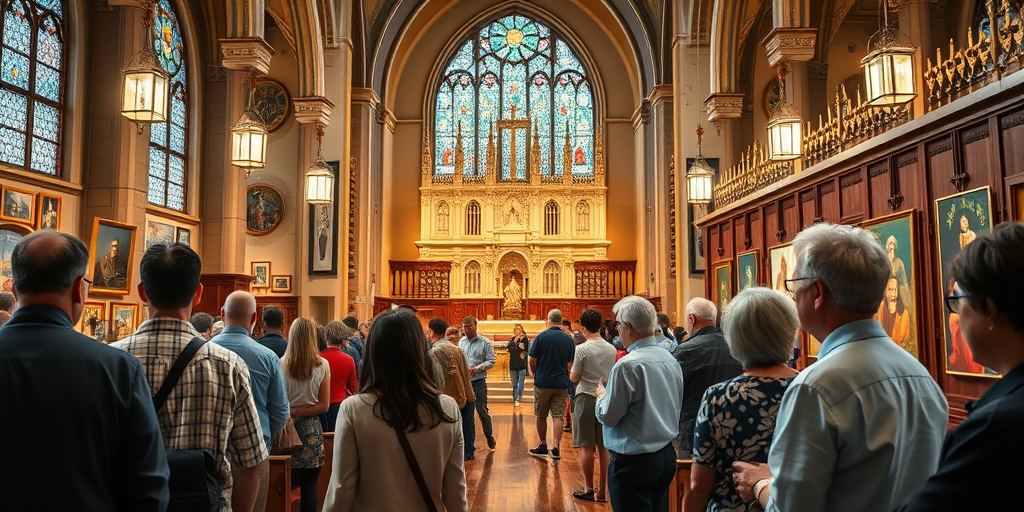
As Genesius recounts travels across the United States, a tapestry of architectural and artistic splendor within Catholic churches emerges. From the venerable Cathedral in St. Augustine, Florida, America’s oldest city, to the mid-20th-century National Shrine of the Little Flower in Michigan, these sites reflect both historical transitions and the steadfastness of faith through art. Modern American churches, adorned with varied styles such as Western European and non-Western influences, symbolize a living heritage accessible to local parish communities.
Churches like the St. Josaphat Cathedral in Parma, Ohio, with its Cyrillic Eastern style, and the Vietnamese Martyrs Parish in Phoenix, Arizona, showcase this remarkable diversity. Local parishioner Maria Lopez notes, “Walking into these churches feels like stepping into a piece of living history. Each space tells a story, connecting us as a community to our past and each other.”
Daniel Mitsui: Merging Traditions Through Art
A significant highlight in modern Catholic art narrative is Daniel Mitsui, an American artist of Japanese descent. His ability to blend medieval European, Northumbro-Irish, and Ukiyo-e Japanese styles breathes new life into traditional religious art. Mitsui’s work illustrates the universal adaptability of faith-inspired art, spotlighting his unique portrayals such as St. Michael as a samurai and a culturally infused depiction of the wedding feast of Cana.
Mitsui’s journey from aspiring comic book artist to a full-time religious artist intertwines with his conversion to Catholicism, with his artistic focus shifting towards intricate, medieval-inspired ink drawings. His compositions—featuring saints, angels, and biblical scenes adorned with New World flora and fauna—invite viewers to explore the order and beauty of creation, reminiscent of illuminated manuscripts from centuries past.
“Daniel’s creations are breathtaking,” remarked Father Joseph Emmet, a local pastor. “They remind us that the sacred and the artistic can coexist beautifully.”
The Local Community’s Embrace and Impact
Mitsui’s work resonates profoundly within local communities, enhancing cultural and religious appreciation. In Northwest Indiana, where Mitsui resides and works, residents feel a particular sense of pride and inspiration. Community member Kevin O’Rourke shares, “Having an artist like Daniel in our area elevates our artistic community, and his spiritual narratives resonate deeply with our faith-based values.”
Beyond aesthetic appreciation, Mitsui’s art fosters educational opportunities. Parishes and schools often utilize his work to teach religious iconography, enriching local faith education programs. This connectivity extends to broader dialogues about multigenerational and multicultural expressions of faith through art—a reflection of both vibrant past traditions and inclusive present endeavors.
Navigating Future Horizons in Religious Art
With an eye towards the future, Mitsui’s ambitions include completing his “Summula Pictoria,” a comprehensive series summarizing the Old and New Testaments through art. Such projects point to an evolving landscape for religious artists, where innovation meets tradition.
The unfolding narrative of modern Catholic art presents potential expansions in cultural tourism and collaborative artistic ventures within local communities, promising economic and cultural advancements. Local officials recognize these opportunities, aligning development strategies to leverage cultural heritage in the Valley and beyond.
Challenges and Considerations
While the vibrancy of modern Catholic art is cause for celebration, maintaining fiscal sustainability and inclusivity remains crucial. Art critics and economists alike caution against overlooking these aspects in excitement for cultural initiatives. Engaging diverse community voices in planning stages can mitigate such risks and augment the effectively inclusive growth of religious art endeavors.
David Campos, a cultural historian, advises “balancing artistic innovation with accessibility, ensuring all Valley residents can engage and benefit.” This reflects broader community interest and dedication to harmonious and sustainable cultural development.
Resources and Continued Engagement
For those wishing to learn more about Catholic art in the community, local parishes and art councils provide ongoing programming and workshops. Mitsui’s website also offers access to his works and engagement details.
As the journey of modern Catholic art evolves, its implications for local community residents are vital. Through sustained enthusiasm and thoughtful consideration, the resurgence in religious art promises to enhance cultural richness and community resilience across America’s diverse landscapes—affirming art’s transformative impact on faith and life alike.
Community members with insights or input on Catholic art initiatives are encouraged to contact local art councils or parishes, fostering collaboration and engagement in future endeavors. As the narrative unfolds, Woke news remains committed to spotlighting local impact, enriching community heritage, and celebrating the artistry interwoven within faith’s enduring tapestry.


