
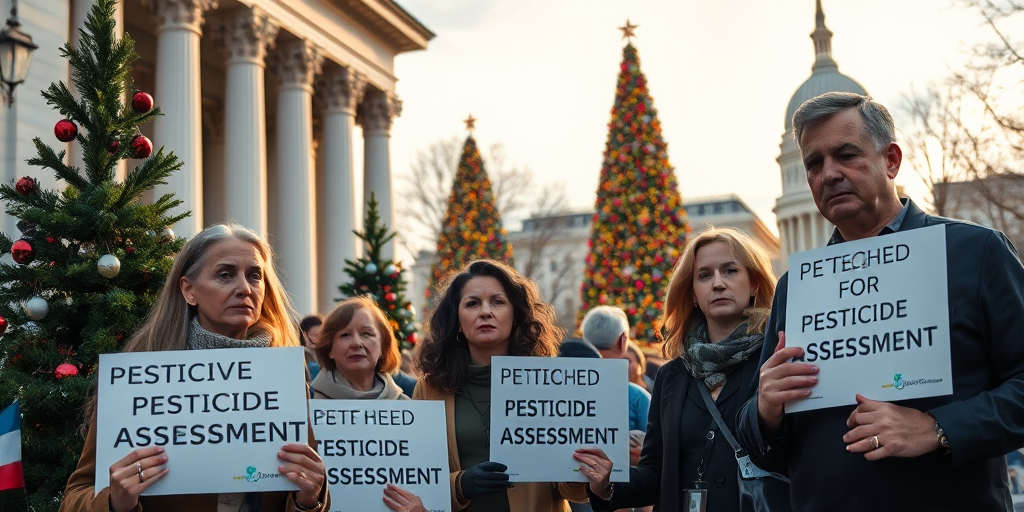
EPA, MAHA Commission Urged to Assess Christmas Tree Pesticides Risks to Children
The holiday season’s traditions may carry unseen hazards as environmental groups raise alarms about the pesticide use on Christmas trees. The Center for Biological Diversity and the Alliance of Nurses for Healthy Environments have filed a petition urging the Environmental Protection Agency (EPA) and the President’s Make America Healthy Again (MAHA) Commission to review the health risks from pesticides commonly used on Christmas tree farms.
Potential Hazards on the Holiday Tradition
Across the U.S., particularly in states like Oregon, Michigan, Pennsylvania, California, Florida, and Texas, Christmas tree farms are using approximately 270,000 pounds of pesticides annually. These states account for two-thirds of the national Christmas tree production. Chemicals such as chlorothalonil, simazine, glyphosate, hexazinone, carbaryl, chlorpyrifos, and dimethoate are being used. These substances are identified as potential endocrine disruptors, carcinogens, and neurotoxins that can impede brain development in children.
The petition argues the essential need for a “special review” under the Federal Insecticide, Fungicide, and Rodenticide Act, emphasizing that the EPA has previously neglected to evaluate children’s exposure to pesticide residues from Christmas trees. President Trump’s recognition of the extensive use of pesticides and his administration’s promises to protect the public from harmful pollutants add urgency to this appeal.
Local Impact: Community Concerns and Risks
This news resonates significantly with local communities, particularly parents who are already vigilant about the chemicals their children are exposed to. The potential danger is exacerbated by children playing under the tree, risking inhalation of contaminated dust or ingesting fallen needles. Furthermore, the warmth from string lights can increase the dispersion of these chemicals into the air.
J.W. Glass, an EPA policy specialist with the Center for Biological Diversity, remarked, “Christmas is a wonderful time of the year, and Americans should be able to bring a Christmas tree into their home that doesn’t carry dangerous chemicals harmful to children and pets.”
Residents in communities where these trees are most prevalent are likely to feel the most direct impact. In the Rio Grande Valley, known for its tight-knit communities and holiday traditions, the news raises concerns about how this issue may affect holiday spirit while also emphasizing the health of the youngest members of society.
Historical Context: A Shift in Practices
The petition notes that the intensive use of chemicals on Christmas trees didn’t begin until after World War II, when agricultural practices became more industrialized. Before this, trees, including the first White House National Christmas Tree in 1923, were generally harvested without the use of heavy-duty pesticides. This historical context underscores a departure from past practices and raises questions about modern agricultural methods in tree farming.
Katie Huffling, executive director of the Alliance of Nurses for Healthy Environments, emphasized the need for updated assessments, stating, “Even low levels of pesticide exposure can permanently harm young children’s neurological and behavioral development.”
A Call for Immediate Action
As the White House prepares for its annual tree lighting ceremony, the timing of this petition is pivotal. The event places a spotlight on public consciousness regarding the products used in celebrating cherished traditions.
Nathan Donley, the environmental health science director at the Center for Biological Diversity, voices hope that the EPA will act promptly. “We sincerely hope that EPA Administrator Lee Zeldin ensures that families don’t have to choose between celebrating with a decorated Christmas tree and protecting their children,” he said.
The petition seeks more than attention; it calls for concrete actions to safeguard public health. The MAHA Commission and other concerned entities are tasked with evaluating the full range of pesticide applications, especially those affecting children.
Looking Ahead: Future Implications
This initiative could initiate a broader discussion about agricultural practices and chemical use in holiday-related industries. If the EPA undertakes the requested review, it may lead to stricter regulations and shifts toward safer, pesticide-reduced Christmas tree farming methods.
However, implementing new standards may encounter resistance from parts of the agricultural sector accustomed to traditional practices. Balancing economic interests with health concerns will be a delicate task for policymakers and health advocates.
Resources and Contact Information
Residents concerned about pesticide exposure can reach out to local advocacy groups for information and support. The Center for Biological Diversity provides resources at biologicaldiversity.org. For more immediate concerns, J.W. Glass is available at (813) 833-5301 or via email at [jglass@biologicaldiversity.org](mailto:jglass@biologicaldiversity.org).
As the debate over pesticide use on Christmas trees unfolds, community interest continues to grow. Ensuring informed choices and protective measures will be crucial during this holiday season and beyond, aligning traditional festivities with modern health standards.


