
**Strengthening Financial Resilience in Guatemala: Intermediary Cities Project Tackles Remittances and Financial Inclusion**
Breaking Down the Initiative
In Guatemala, the Inter-American Dialogue has launched a significant initiative to address the intertwined issues of remittances and financial inclusion. Supported by the Central Bank of Guatemala, this effort aims to fortify the link between remittance flows and financial stability, particularly in light of potential income impacts due to shifting migration patterns and a projected remittance slowdown by 2026. This strategic focus bears important implications for the local community, setting a new paradigm for economic resilience in Guatemala’s intermediary cities.
The First Steps: Opening Dialogue
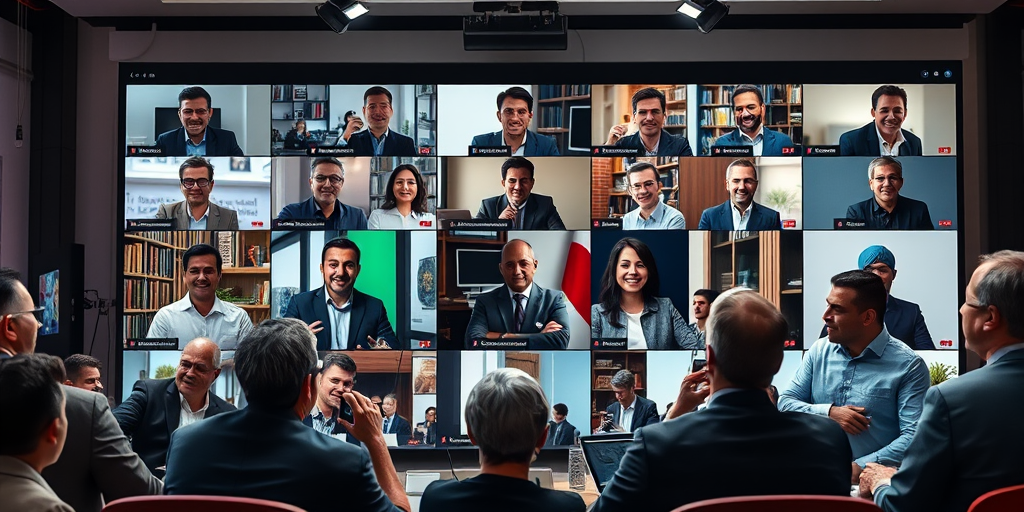
On July 30, the Intermediary Cities Project made its debut with its first working group meeting, attended by 49 representatives from various sectors including banking, fintech, and public institutions. The objective of this assembly was to identify risks for families affected by declining migration and remittances and to develop cooperative solutions to ensure financial stability.
At the meeting, Mariana Castillo, a delegate from a local credit union, expressed hope, saying, “Residents who rely on remittances are incredibly vulnerable to shifts beyond their control. Our aim is to create practical frameworks that shield them from unpredictable economic stressors.”
Building on Dialogue: November Progress
A follow-up meeting on November 13 reinforced the group’s commitment to informed dialogue, focusing on remittance projections through 2026. With 24 representatives in attendance, the meeting further explored ways to enhance financial inclusion, emphasizing the role it plays for households that heavily depend on remittances.
Eduardo Garcia, an economist specializing in remittances, highlighted, “Financial inclusion is not just about access to a bank account; it’s about integrating individuals into the economic fabric so they can partake in growth opportunities.”
Local Impact: Financial Inclusions’ Role
For residents of the Valley and similarly surveyed regions in Guatemala, this initiative has the potential to transform lives by enabling greater personal financial management and planning. For communities where remittances make up a significant portion of household income, robust financial inclusion frameworks are a pivotal tool for buffering against economic instability.
Gustavo Ramirez, a local business owner, remarked, “Encouraging people to save and invest right here can spur local business growth and create jobs. It’s a win-win for our community.”
Connecting with Community Concerns
This initiative arises at a crucial juncture. Over the years, Guatemalan communities have advocated for increased access to financial services to combat the limitations that come with over-reliance on remittances. Historically, remittances have been a double-edged sword: while providing substantial income, they can also discourage local economic development due to their fluctuating nature.
In the dialogue sessions, government officials, fintech experts, and local academics deliberated on actionable solutions such as promoting investments in government bonds by the diaspora and enabling easier access to retirement schemes and credit. These measures not only stand to diversify income sources but also enhance economic security.
Balancing Perspectives and Future Implications
As with any major policy initiative, it’s crucial to weigh different perspectives. Some critics raise concerns about the pace of implementation and the need for transparency. Carmen de León, a community organizer, voiced, “It’s vital that these proposed changes reflect the needs of our community, and not just top-down financial approaches.”
Future meetings aim to build on this momentum, shifting from bilateral conversations to tangible, impactful actions. The hope is to create sustainable, inclusive financial environments by endowing local populations with both the knowledge and the resources they need to thrive amid impending economic changes.
Support and Resources for Residents
To encourage broader community engagement, the working group is organizing a series of workshops and informational sessions open to the public. These will provide residents opportunities to offer feedback, ask questions, and better understand how the initiative might personally impact their financial futures.
In addition, local residents interested in participating in this dialogue or accessing newly proposed financial services can contact the Central Bank of Guatemala for more information.
The Inter-American Dialogue’s initiative in Guatemala serves as a template for sustainable development, anchored in collaboration and practical action. By fostering financial resilience, especially in intermediary cities, the project advances the community’s interest, creating a foundation for enduring economic stability and growth. Through systematic efforts to integrate remittance-dependent households into the formal financial system, this initiative promises profound local impact and empowers residents to navigate future economic landscapes with confidence.


