
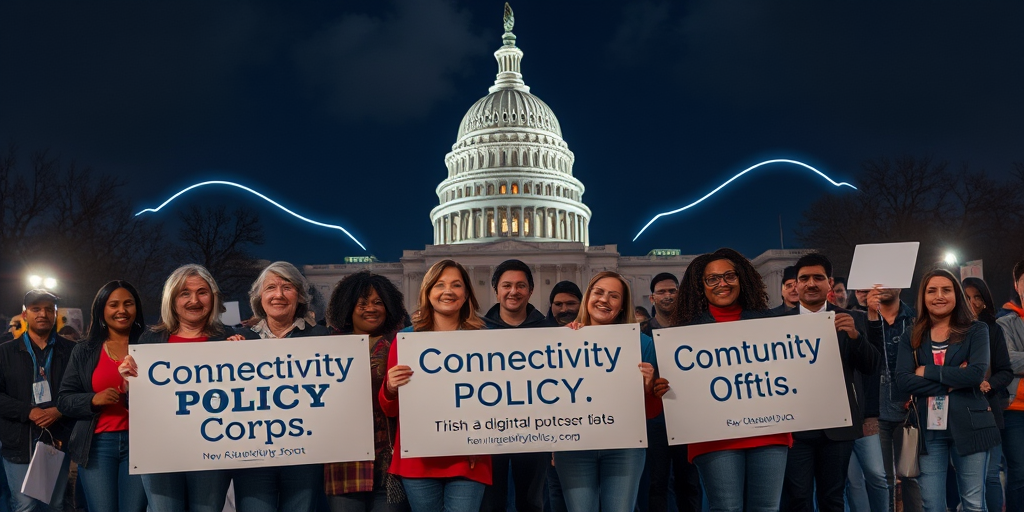
Connectivity Policy Corps: Fostering Digital Equity in the U.S.
The movement towards digital equity in the United States has taken a significant leap forward with the launch of the Connectivity Policy Corps (CPC), an initiative spearheaded by the National Digital Inclusion Alliance and Public Knowledge. This program unites 18 digital inclusion organizations from 14 states in a collaborative effort to influence broadband and digital inclusion policies over a yearlong engagement. Residents and community leaders in these states are hopeful that their collective voice can steer meaningful change in digital connectivity policies.
Striving for Broadband Inclusion
Digital access is essential in today’s economy; however, many communities remain underserved. Angela Siefer, Executive Director of the National Digital Inclusion Alliance, notes the rising impact of artificial intelligence on broadening digital divides, asserting that “AI increases the digital divide — 100 percent.” With initiatives like CPC, there is an opportunity to amend existing challenges by equipping communities with advocacy tools, training, and networking opportunities, promoting digital access as a fundamental right.
Public knowledge President and CEO Chris Lewis emphasized the urgency of affordable and inclusive broadband as we face another digital revolution, stating, “The need for broadband access has never been greater.” Bridging this gap could significantly enhance everyday functions, from education and economic opportunities to healthcare and civic participation.
Involved organizations, drawn from a diverse array of regions including Alabama, Alaska, and New York, aim to embody local voices in policy discussions, highlighting issues unique to each locality. Their efforts are aimed at reforming existing mechanisms, like the Universal Service Fund, to better serve economically challenged areas by providing more affordable connectivity options.
Legislative Initiatives: Addressing Skills Gaps
Meanwhile, U.S. Congress members have introduced the bipartisan, bicameral Digital Skills for Today’s Workforce Act. The act observes that many jobs today demand digital skills, a requirement amplified by the advancing tide of AI technologies. By amending the Workforce Innovation and Opportunity Act (WIOA), the legislation hopes to establish grants specifically for digital skills development, making workforce training systems more responsive to modern needs.
Senator Tim Kaine highlighted the critical nature of digital competencies, stressing that empowerment through skills training is crucial as Americans encounter a rapidly evolving job landscape. Despite the necessity, data reveals nearly a third of workers lack foundational digital skills, underscoring the legislation’s urgency.
The Wi-Fi Caucus: Educating for the Future
On a federal level, the bipartisan Wi-Fi Caucus has been relaunched to provide members of Congress with a deeper understanding of Wi-Fi’s role in public service and economic growth, as well as its geopolitical implications. Chaired by U.S. Reps. Troy A. Carter Sr. and Bob Latta, alongside Sens. Pete Ricketts and Jacky Rosen, the caucus seeks to facilitate informed policymaking, ensuring that technological advancements benefit all Americans.
David Zumwalt, President of the Wireless Internet Service Providers Association, recognized the caucus as an essential platform for fostering informed dialogue on pivotal issues surrounding Wi-Fi technology’s future.
State Initiatives: Massachusetts Leading the Way
At the state level, Massachusetts is taking concrete steps with its Municipal Digital Equity Implementation Program, allocating $4.5 million to enhance digital infrastructure, skills training, and community engagement. Through targeted projects that address digital literacy and device distribution, the state aims to mitigate the impacts of economic hardship by offering enhanced connectivity solutions.
Jody Jones from the Massachusetts Broadband Institute emphasized the strategy of leveraging state resources to pinpoint connectivity gaps and support residents. Such efforts contribute significantly to narrowing the digital divide by modernizing public spaces and expanding internet access across communities.
Balancing Local and Federal Efforts
As municipalities gear up to implement these changes, calls have been made by over 160 state legislators for the U.S. Department of Commerce to release “non-deployment” funds under the BEAD Program. These resources are crucial for fostering AI infrastructure, improving cybersecurity, and developing the telecommunications workforce. Failure to deploy these funds, they argue, would negate the full legislative intent of the bipartisan infrastructure law.
In the Delta, tech courses like those in Clayton County, Georgia, and AARP’s sessions in Wyoming exemplify local initiatives aimed at boosting digital literacy. These are fundamental to ensuring citizens can effectively engage with and benefit from technological advancements, driving economic and community progression.
Future Outlook and Community Engagement
As these efforts unfold, they signal a promising yet complex path forward for digital equity in the U.S. The CPC’s approach of elevating local voices can provide tailored solutions, aligning national objectives with community-specific needs. This collaboration between federal and state entities, supplemented by local initiatives, underscores a multi-layered strategy toward achieving digital inclusivity.
Resource hubs, such as local commissioners’ offices and online platforms, stand ready to support interested residents in navigating these changes. For a community that has long awaited meaningful progression in digital accessibility, these steps mark significant progress, reinforcing the foundational belief that digital inclusivity underpins a thriving modern society.
As these efforts take root, they hold the potential to transform communities, ensuring that every resident, particularly in underserved areas, can fully participate in our digital future.


