
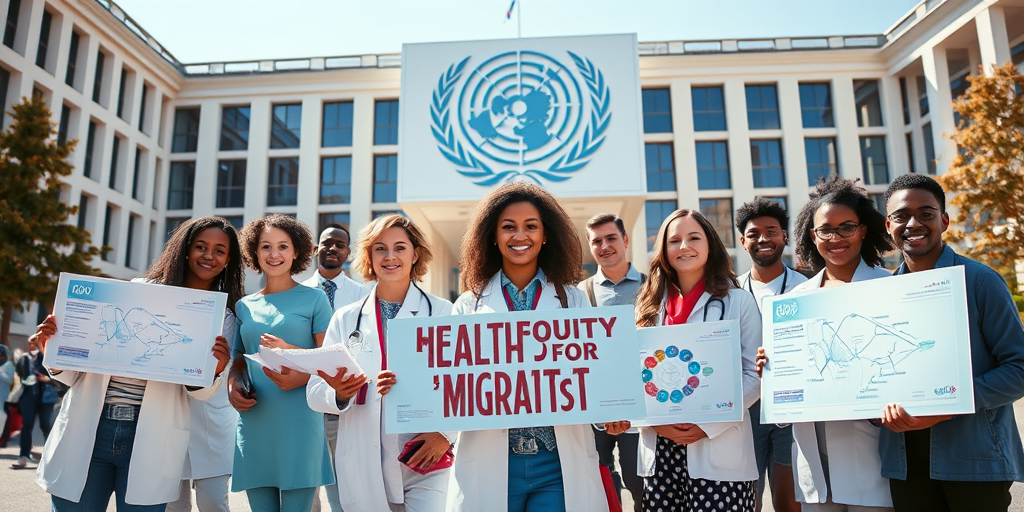
**Advancing Health Equity for Migrants: WHO’s Bold Call to Action**
On International Migrants Day, the World Health Organization (WHO) underscores a critical message—the health of international migrants is a fundamental right, not a privilege. Recognizing the profound impact of the 304 million international migrants worldwide, WHO’s emphasis on health equity comes at a time when global migration patterns are increasingly influencing local communities, such as those in the United States, with significant implications for public health systems and community cohesion.
Recognizing Migrants as Key Contributors
Migrants and refugees are often pivotal to the development of the countries they reside in. They contribute as healthcare workers, community leaders, and cultural ambassadors. However, despite their invaluable contributions, many face hurdles that hinder their access to necessary healthcare services. Legal, financial, and cultural barriers frequently stand in the way, according to Dr. Maria Gonzalez, an expert on migrant health at the University of Texas. “These barriers not only deny individuals their basic rights but also have wider implications for public health and community well-being,” she states.
The WHO’s call to action is part of a broader 2019-2030 Global Action Plan dedicated to promoting the health of refugees and migrants. This plan outlines strategies for inclusive health systems, ensuring no one is left behind. The organization is also actively working with Member States through its Special Initiative on Health and Migration to create more inclusive health strategies.
The Local Impact in the United States
In the context of American communities, particularly those with substantial migrant populations, such as California, Texas, and New York, the WHO’s message resonates deeply. These regions have faced challenges in integrating migrant populations into their existing health systems. “Health equity for migrants is particularly relevant in areas like the Rio Grande Valley, where communities are frequently at the forefront of immigration issues,” says Dr. John Parker, a public health official in Texas. He notes that fostering migrant-inclusive health systems can serve as a catalyst for healthier, more cohesive communities.
Historically, the U.S. has been a melting pot, and this diversity has enriched its cultural and economic fabric. However, it also requires systematic approaches to overcome barriers that migrants face. Local health initiatives and nonprofits often step in to bridge these gaps, but systemic change driven by policies aligned with WHO’s recommendations could have a more lasting impact.
Sharing Global Experiences
One innovative resource introduced by WHO is the Dashboard on Global Experiences in Promoting Refugee and Migrant Health. This dynamic platform showcases 167 experiences from 83 countries, serving as a rich database of practical models for creating migrant-inclusive health systems. By fostering international collaboration, the dashboard encourages best practice sharing and could inspire localized solutions in the U.S.
Furthermore, initiatives like the Sixth WHO Global School on Refugee and Migrant Health, which has trained over 20,000 professionals globally, emphasize the need for leadership and knowledge-sharing in health and migration. “Training healthcare workers to be culturally sensitive and aware of the unique challenges faced by migrants is crucial,” argues Nancy Rodriguez, coordinator for a health NGO in California. “It’s about creating a welcoming environment that addresses the specific needs of these communities.”
Potential Future Implications
As emphasized by WHO, continued investment in migrant-sensitive health systems is imperative. Engaging migrants actively in health responses not only enhances access to care but also builds trust and reciprocity within communities. “Incorporating migrants’ voices in their healthcare strategies can enhance the equity and effectiveness of our public health responses,” maintains Sarah Lee, a health policy advisor based in New York.
Balanced reporting and consideration of various perspectives are key drivers in this initiative. While some stakeholders might express concerns over resource allocation or the pace of implementation, the overall consensus leans towards health equity as a shared goal that benefits all.
Looking ahead, the call for expanded evidence-based solutions extends opportunities for innovation in healthcare delivery. It can spark advancements in telehealth, multilingual support services, and community health partnerships, fostering an environment where all residents, regardless of their origin, can thrive.
Resources for Migrants and Community Members
For local residents and migrants in the U.S. seeking support or wanting to engage with these developments, pathways are available. Community organizations, local health departments, and platforms backed by WHO efforts provide avenues for education, advocacy, and active participation. Resources such as the National Immigration Law Center and local community health coalitions can offer guidance and support.
In conclusion, as the United States continues to navigate the complexities of global migration, the WHO’s initiatives serve as an essential framework for advancing health equity. These measures have the potential to inspire significant changes in local impact, fostering communities that are healthier, more inclusive, and resilient. As these discussions evolve, they highlight the critical importance of collaborative efforts toward achieving health for all.


