
**Gender Equality in Montenegro: An Obligation Rather than a Mere Promise**
The European Union’s Delegation to Montenegro has issued a call to action for gender equality, urging that it be recognized as a systemic obligation and not just a principle on paper. As Montenegro continues its journey towards European integration, officials stress that addressing deeply entrenched stereotypes and integrating gender perspectives are crucial in shaping a more equitable society.
**Survey Reveals Stark Challenges**
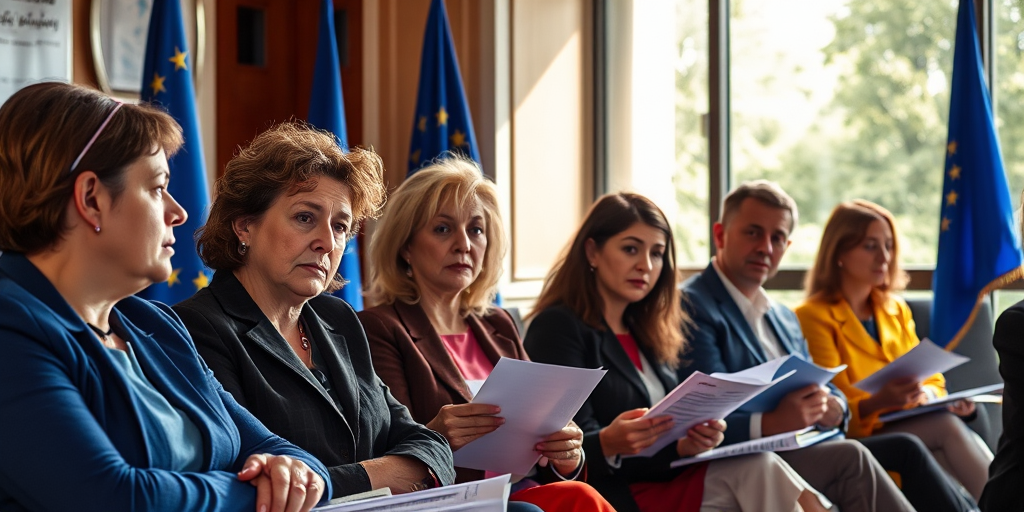
At the recent “Transforming Institutions for Gender Equality” event hosted in Montenegro, new survey results underscored the significant challenges facing both society and institutions. The data revealed that stereotypes remain deeply rooted, with nearly half of Montenegrins feeling that gender equality is overstated. More alarmingly, almost two-thirds of respondents believe that men and women do not share equal rights. Additionally, over half assert that men make better leaders, while the majority prioritize motherhood as a woman’s primary role.
Ekaterina Paniklova, Resident Representative of UNDP Montenegro, emphasized the importance of these findings, stating, “These results reflect a societal turning point where women’s leadership must take clear responsibility, and gender perspectives need to be integrated into every institutional process.”
**Collaborative Commitment to Gender-Responsive Governance**
The conference outlined a joint effort by the European Union, UNDP, and the Government of Montenegro to embed gender equality into the heart of governance. Participants including Liselotte Isaksson, Deputy Head of Cooperation at the EU Delegation to Montenegro, underscored this commitment. She stated, “Montenegro must use all available talent, not just half of it. We need institutions that authentically reflect the societies they represent to remain competitive and just.”
Montenegro’s path toward the European Union integrates gender equality as a fundamental aspect of institutional development. Minister of European Affairs Maida Gorčević highlighted the urgency of this mission, declaring, “This isn’t just an administrative requirement but a personal belief. Our task is to create an environment where both women and men can thrive equally.”
**Local Implications and Community Impact**
For the residents of Montenegro, these developments could herald significant changes. The introduction of structural reforms like increased electoral quotas is designed to amplify women’s voices in politics, an essential step towards more inclusive decision-making. As explained by Naida Nišić, Minister of Labour, Employment, and Social Dialogue, “Labour reform in Montenegro must ensure dignity and equality at work—a right rather than a privilege.”
These changes aim to provide an equitable platform for Montenegrins, encouraging broader participation and ensuring that public administration serves the community’s diverse needs. Agron Camaj, Director of the Human Resources Administration, articulated, “Recognizing the potential of both women and men equally is crucial for advancing society and ensuring a fair and professional administration.”
**A Step Towards a Gender-Equal Future**
Looking ahead, the potential establishment of a Gender Equality Agency could spearhead further advancements. Parliamentary representatives such as Jelenka Andrić and Aleksandra Despotović have been pivotal in propelling these legislative changes. Their advocacy focuses on increasing the electoral quota to 40 percent and implementing more robust measures against violence against women.
This initiative mirrors efforts across other countries striving to modernize gender policies and achieve real equality. The decision to incorporate measures such as a Digital Platform for gender equality data emphasizes the need for informed, evidence-based policy making—a tool essential for developing sustainable, gender-responsive policies.
**Challenges and Considerations**
While progress appears promising, the journey toward genuine gender equality is fraught with complexities. Some community members express concerns over potential cultural and economic impacts. It’s crucial that these initiatives are perceived as progressive steps rather than imposing changes.
Future efforts should therefore foster dialogues, encouraging community buy-in while remaining respectful of cultural nuances. To this end, events and public forums offer platforms for residents to engage and voice their perspectives, creating a continuous feedback loop that informs policy development.
**A Call to Action for the Global Community**
The advancements in Montenegro illustrate a broader commitment to gender equality—one that is being echoed in various regions around the globe. By addressing inequality at its roots and embracing comprehensive structural reforms, this small Balkan nation is paving a path that could inspire others.
For international observers and stakeholders, these developments underscore the importance of maintaining pressure on governments and institutions to honor their commitments to gender equality. As echoed by the speakers at the conference, the pursuit of a balanced and fair society remains an ongoing challenge and an essential human rights issue.
For further resources and inquiries about Montenegro’s gender equality measures, interested parties can reach out through the Digital Platform for gender equality data or participate in upcoming public sessions hosted by government agencies.
**Woke news remains committed to covering these critical developments, continually highlighting stories that resonate with our community and inform on vital social advancements.**


