
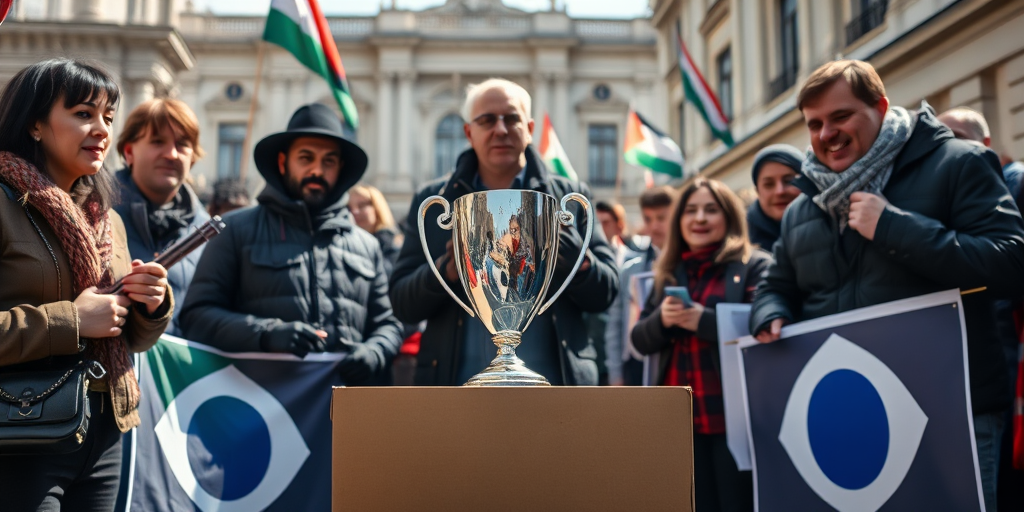
Eurovision Winner Nemo Returns Trophy in Protest Over Israel’s Inclusion
In a powerful statement of protest, Swiss Eurovision winner Nemo announced they would be returning their 2024 Eurovision trophy, voicing opposition to Israel’s participation in the contest. Highlighting a perceived contradiction with the competition’s ideals of unity and inclusion, Nemo’s decision resonates across borders and has ignited debates in communities concerned about global politics and cultural representations.
Key Developments in the Eurovision Saga
Nemo’s decision to return the trophy is rooted in the ongoing conflict and humanitarian concerns surrounding Israel’s involvement in Gaza. Despite a ceasefire agreed upon in October, reports cite a death toll of over 70,000 Palestinians, which underscores the severity of the ongoing crisis.
The European Broadcasting Union (EBU), responsible for organizing the annual music contest, emphasized its respect for Nemo’s deeply held views while expressing regret over the return of the trophy. As the director of the contest, Martin Green reiterated Eurovision’s commitment to inclusivity while acknowledging the complexities of the geopolitical landscape.
Global Ripples with Local Resonance
This move is not just making waves internationally; it reverberates locally as communities in the United States reflect on the intersections of culture, politics, and personal values. The protests and boycotts highlight an increasing willingness among artists and nations to voice opposition to what they perceive as hypocrisy in global platforms that are meant to be apolitical.
In solidarity, multiple countries, including Spain, the Netherlands, Ireland, Slovenia, and Iceland, have announced a boycott of the 2026 competition due to Israel’s continued inclusion. This collective stance amplifies the dissent voiced by individual artists and highlights the broader implications of cultural events being used for political messaging.
Local Impact: Community Voices and Perspectives
In the U.S., local artists, activists, and community members are engaging in dialogues about the role of cultural events like Eurovision in promoting genuine inclusion and harmony. Long Beach resident and community organizer Sarah Williams commented, “It’s crucial for global events like Eurovision to uphold the values they claim to represent. Nemo’s decision shines a light on the need for accountability and the role of cultural platforms in politics.”
Cultural experts emphasize the significant role that community-based dialogues play in bridging differences and fostering understanding. “Events like these challenge us to reflect on our values and reconsider how international platforms influence local sentiments,” noted Dr. Robert Aguilar, a cultural studies professor at the University of Southern California.
Historical Context and Ongoing Concerns
The Eurovision Song Contest, historically viewed as a platform for showcasing diverse musical talent, is not new to political controversies. Instances like Ireland’s 1970s protest songs and more recent concerns around participating countries’ policies have sparked debates about maintaining the event’s apolitical stance.
The EBU faces the continuing challenge of balancing these issues while organizing a contest that draws massive international audiences. As such, the impact of political actions by artists and countries will likely shape Eurovision’s future policies and participants’ expectations.
Potential Future Implications
The current wave of protests and boycotts could signal broader shifts in how organizations like the EBU handle geopolitical issues moving forward. If such actions gain momentum, they might lead to policy reevaluations or alternative platforms for artists seeking to express political or social messages without repercussions.
Looking ahead, the consequences of these developments might not only redefine the future of Eurovision but also encourage other international events to explore more transparent and equitable frameworks. For local audiences, these discussions contribute to a robust discourse around how art intersects with activism and its broader societal implications.
Resources for Engaged Readers
For residents and community members interested in delving deeper into this evolving story, Woke News will continue providing updates and hosting community forums. Engaging experts and local voices, these sessions will foster a deeper understanding of geopolitical influences on cultural narratives.
As the story evolves, it emboldens communities worldwide to reflect on the narrative power of art and the responsibility of global platforms to uphold the values they publicly espouse. In doing so, it potentially drives transformative changes that align cultural celebrations with their original intent of promoting unity and mutual respect across diverse boundaries.


