
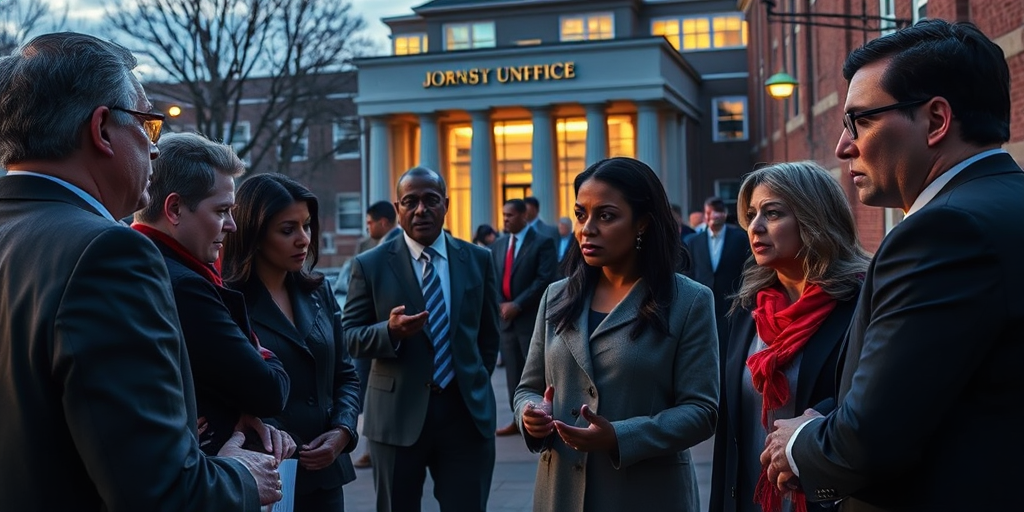
The Disappearing Diversity Programs at Johns Hopkins University: A Shift in Institutional Priorities
Johns Hopkins University, a prestigious institution known for its commitment to diversity, equity, and inclusion (DEI), has significantly scaled back its diversity initiatives in the wake of federal pressures. Following former President Donald Trump’s inauguration, an administrative edict opposing DEI policies led to the reduction of the university’s diversity office staff from 14 to just three. This action reflects a broader national trend of universities reassessing their diversity programs amidst evolving legal and political landscapes.
Challenges and Changes at Johns Hopkins
The rollback of diversity initiatives at Johns Hopkins coincided with the Trump administration’s stance against policies supporting DEI. The university faced the possibility of losing over $1 billion in research and international aid funding, prompting a cautious approach to federal compliance. These financial pressures led to hiring and pay freezes and increased spending on federal lobbying efforts.
Vicki Keller, a former senior program manager, described her frustration with the new policy measures. “I wanted to work, but I couldn’t,” she said, highlighting the administrative gridlock that stifled the diversity office’s efforts.
Despite the institutional cutbacks, Hopkins maintains its formal commitment to non-discrimination and equal opportunities. Doug Donovan, a spokesperson for the university, stated, “We fiercely oppose discrimination of any kind, and we value equal opportunity as part of building a pluralistic community of diverse backgrounds, experiences, and viewpoints.”
Local Impact and Community Interest
The changes at Johns Hopkins have significant local implications, resonating throughout Baltimore and the surrounding areas. The university has traditionally been a pillar of higher education in Maryland, contributing to diverse academic and social advancement initiatives. For local residents, the rollback in diversity programs signals a shift that may affect access to resources previously available to underrepresented communities.
Minkah Makalani, director of the Center for Africana Studies at Hopkins, offered insight into the impact of these changes. “As a historian of the Black experience, there’s an extremely disconcerting nature to these announcements,” he remarked. The discontinuation of programs like the Fannie Gaston-Johansson Faculty of Excellence, designed to enhance minority representation, underscores a broader re-prioritization of university initiatives.
The university’s stance mirrors a national reevaluation of DEI strategies, sparking concern among communities who rely on these programs for career advancement and academic support. For Baltimore residents, particularly those from marginalized backgrounds, the reduction in diversity programs may limit opportunities that were once a source of empowerment and progress.
Connection to Ongoing Issues
The downsizing of diversity initiatives at Johns Hopkins is part of a larger trend observed in higher education institutions across the country. Universities have faced scrutiny for promoting policies perceived as inconsistent or insufficiently integrated into overarching operational frameworks. Dr. Roger L. Worthington, a University of Maryland College Park associate professor, emphasized that much of the diversity work has appeared “performative.”
“The pendulum has swung in the opposite direction,” Worthington observed, citing increased legal accountability as a factor contributing to the rollback. Angel St. Jean, co-founder and CEO of The Black Brain Trust, asserted that the changes invoke a larger debate about genuine commitment versus superficial adherence to diversity ideals.
Future Implications and Resources
For Johns Hopkins and other institutions following suit, the future of diversity programs remains uncertain. The policy shift could prompt a reevaluation of how diversity-related efforts are integrated into academia. It may also encourage a dialogue about the balance between regulatory compliance and championing inclusive environments.
In response to these developments, local organizations and advocacy groups within Baltimore are mobilizing to offer additional support to students and faculty affected by these changes. The Center for Africana Studies, alongside community partners, is working to ensure that resources and mentorship continue to be available through alternative channels.
As Johns Hopkins navigates this complex landscape, the community is encouraged to engage with university officials and participate in discussions about preserving diversity and inclusion in academia. The Office for Diversity and Inclusion remains accessible to those seeking guidance and to address concerns about the university’s future direction.
In conclusion, the retrenchment of diversity programs at Johns Hopkins University has elicited significant concern among local residents and stakeholders. As institutions nationwide reassess their commitments to DEI, ongoing advocacy and community interest will play crucial roles in shaping the future of academic diversity and inclusion efforts.


