
**Breath(e): An Exhibition Bridging Climate and Social Justice for All Communities**
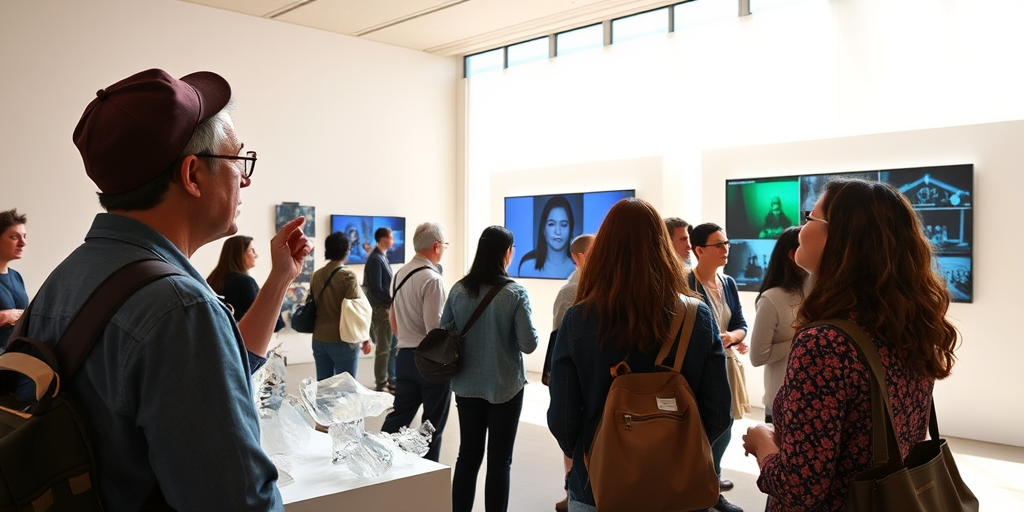
With the Jan Shrem and Maria Manetti Shrem Museum at the University of California, Davis, currently hosting the thought-provoking “Breath(e): Toward Climate and Social Justice” exhibition, the spotlight is on climate connections linking human and non-human communities. Prominent for challenging anthropocentric perspectives, this exhibition also embodies social justice themes by bringing environmental consciousness to the forefront.
Exhibition Overview
Running from August 7 through November 29, “Breath(e)” features artworks that emphasize the interconnection between environmental and social justice issues. Curated initially for UCLA’s Hammer Museum by Glenn Kaino and Mika Yoshitake, the exhibition found renewed purpose amid the COVID-19 pandemic and heightened awareness from the Black Lives Matter movement. The pandemic underscored how the simple act of breath ties to resistance, survival, and, for marginalized groups, an act of defiance against structures that threaten their existence.
Grace Xiao, Curatorial Assistant at Manetti Shrem, reflected on these influences, stating, “They remind us that breath is precarious and that for marginalized communities, survival is a form of resistance.”
Art Reflecting Environmental and Social Themes
The exhibition incorporates various media, like Brandon Ballengée’s paintings using oil from spills, symbolizing the environmental impact of human actions. His work illustrates fish from the Gulf of Mexico, highlighting environmental degradation’s threat to biodiversity while underscoring that change is possible.
Cannupa Hanska Luger, known for examining human-nature relationships, also presents significant works. Part of the “Sovereign Series,” his sculptures include local materials like clay, envisioning future landscapes respecting the sovereignty of natural life.
“Anti-anthropocentrism recognizes sovereignty in nature,” Xiao elucidates. “Luger’s work, for instance, includes local clays, each element mutually reinforcing the idea of shared environments.”
Additionally, Michael Joo’s 3D-printed coral sculptures as part of the “Noospheres” installation use AI to explore how technology may aid in environmental restoration. “Michael investigates AI and artificial coral structures to benefit marine environments,” Xiao shares. Despite AI’s controversies, Joo’s work fuses art and technology, sparking reflection and discussion among visitors.
A Local Cultural Intersection
The “Breath(e)” exhibition isn’t just a visual journey but a narrative of cultural heritage and current social dialogues, reverberating within the Davis community and beyond.
Jin-me Yoon’s “Turning Time (Pacific Flyways)” is an evocative video piece showcasing traditional Korean crane dance. It reverberates the continuum of time, honoring past, present, and future through cultural expression. This connection resonates with Davis’s celebration of diverse cultural identities, like the recent Día de los Muertos event, which also emphasizes heritage preservation.
Interactive and Educational Endeavors
The Manetti Shrem Museum extends “Breath(e)” beyond the walls of exhibition with endeavors like the “Art Spark” program. Linda Alvarez, the museum’s Program Coordinator, highlighted three art activities inspired by the exhibition—ranging from bee-themed sculptures to gel plate printing. “Art Spark draws elementary children to elders, each engaging with exhibition themes,” she states.
Further amplifying the exhibition’s reach, a course titled “Major Voices in Black World Literature,” inspired by “Breath(e),” aligns themes tackling Black storytelling with artistic expressions, breaking away from linearity to embrace diverse narratives.
Qianjin Montoya, Academic Liaison, explains, “Students respond to texts and art, aligning Black and non-Western storytelling, emphasizing personal connections transcending traditional narratives.”
Community Engagement and Future Implications
As “Breath(e)” continues captivating audiences, it prompts a wider contemplation on balancing development goals with environmental stewardship. Local reaction has been overwhelmingly positive. Commissioner Jesus Cazares noted, “Engagement is vital—citizens of the Valley must see such efforts ripple through policies and education.”
Furthermore, the local impact, which Woke News actively follows, suggests potential policy discourse—reflecting on a commitment to integrating art into curriculum and community growth plans, ensuring sustainability isn’t sidelined in economic strategies.
As the exhibition draws its curtain close, the dialogues it inspired are expected to uphold momentum, extending its principles into community interest projects, enhancing the understanding of shared struggles, and binding residents into a cohesive network advocating for climate and social justice.
Ultimately, “Breath(e): Toward Climate and Social Justice” offers a lens through which visitors explore the myriad ways humanity must reevaluate its interaction with the world—a timely reflection essential for the well-being of diverse communities sharing earth’s resources.


