
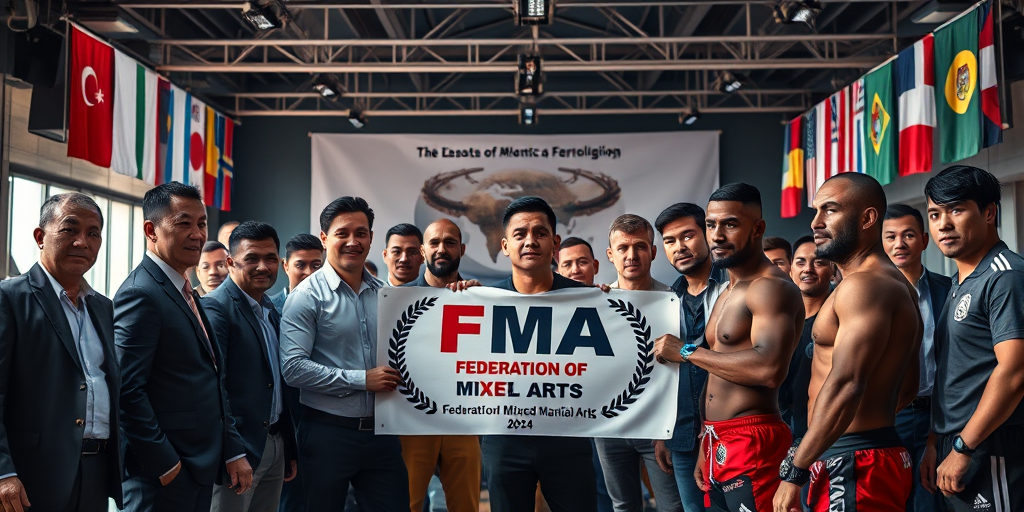
New International MMA Body Aims for Global Unity and Olympic Inclusion
In a significant development for the world of Mixed Martial Arts (MMA), the Federation of Mixed Martial Arts (Fimma) is set to officially launch on December 1. Announced during a press briefing attended by senior officials, this new international governing body aims to unify the sport’s amateur structures and push for its inclusion in the Olympics.
The Need for a Unified Governing Body
The establishment of Fimma comes in response to long-standing calls from athletes and national federations demanding a single, cohesive body to streamline the governance of MMA. Gordon Tang, president of the Asian Mixed Martial Arts Association (Amma) and a key founding partner of Fimma, has been a major advocate for this unifying effort. “We are ready to collaborate with any organization that shares a commitment to protecting and promoting the interests of MMA and its athletes,” Tang stated in his address.
Currently, the mixed martial arts landscape is fragmented, with different organizations like the Global Association of Mixed Martial Arts and the International Mixed Martial Arts Federation hosting their own competitions and establishing varying rules for amateur events. The formation of Fimma is seen as a crucial step in standardizing these diverse elements under one authoritative umbrella.
Engaging with Existing Bodies
Discussions have already begun with existing MMA bodies to create a collaborative framework that benefits athletes and the sport as a whole. Among the standard rules Fimma plans to implement is a ban on head strikes to grounded opponents, a move that underscores the federation’s commitment to athlete safety and consistency across competitions.
The federation’s strategy draws inspiration from developments in Asia, where MMA has gained recognition and respect within broader multi-sport events. Notably, MMA is slated for inclusion in the 2026 Asian Games, a significant milestone that underscores the sport’s growing legitimacy and appeal.
The Local Impact and Community Interest
For MMA enthusiasts and athletes in the United States, the introduction of Fimma holds particular significance. As the sport continues to surge in popularity domestically, a unified governing body could streamline pathways for amateur fighters aspiring to achieve international recognition. Moreover, this alignment might invigorate local gyms and training centers, offering them direct access to standardized regulations and official channels for competition.
Rebecca Lawson, a local MMA coach and former professional fighter, highlighted the positive implications of this development. “For our local fighters, having a consistent set of international standards opens doors to higher levels of competition. It’s a chance to showcase their skills on a global stage, something we’ve all been hoping for,” Lawson commented.
Inclusion in the Olympics: A Potential Game Changer
One of Fimma’s ambitious goals is to advocate for MMA’s inclusion in future Olympic Games. This potential evolution could elevate the sport’s status, offering athletes a platform akin to other martial arts that have long been part of the Olympic tradition. Such recognition would not only bolster the sport’s credibility but could also increase funding opportunities and institutional support, benefiting fighters at every level.
Dr. Mark Thompson, a sports historian specializing in Olympic studies, noted the potential ramifications. “Inclusion in the Olympics would be a groundbreaking achievement for MMA. It would expose the sport to a wider audience and inspire the next generation of athletes globally,” Thompson said.
Challenges and Diverse Perspectives
Despite the promising outlook, the path toward unification and Olympic inclusion is not without its challenges. Some critics question whether a single governing body can adequately represent the diverse interests present within the MMA community. Balancing the needs of different organizations, each with its unique history and mission, remains a delicate task.
There are also concerns regarding how these changes will influence local competitions and events in the short term. Ensuring that grassroots programs continue to thrive while adapting to new international standards is a key priority for Fimma as it seeks widespread adoption.
Resources and Future Outlook
For residents interested in learning more about what these changes mean for the local MMA scene, Woke News will continue to provide updates and insights as the federation rolls out its initiatives. Community forums and workshops are expected to be held over the coming months to facilitate dialogue and ensure that the voices of athletes, coaches, and MMA enthusiasts are heard.
As Fimma takes its first steps on the international stage, it symbolizes not only a new chapter for MMA but also its commitment to growth, safety, and unity. With a clear vision and united front, the federation aims to position MMA alongside other elite sports, elevating it to the global recognition it deserves.


