
Redefining Leadership: Darlene King-Turner’s Crusade for Equity and Inclusion
Darlene King-Turner, the CEO and President of The Unity Collective, is setting the stage for transformative conversations about equity and leadership through her recent appearance on Detroit is Different’s podcast network. By focusing on the role of Black men in leadership equations, King-Turner is shaping a dialogue that challenges conventional notions of diversity and drives towards genuine equity.
Detroit is Different: Highlighting Unique Cultural Narratives
Detroit is Different serves as a crucial platform for the city’s Black community, offering a podcast network that places an emphasis on leadership, community, and cultural discussions. This initiative seeks to give voice to Detroit’s gifted figures and narrate stories that are often sidelined by mainstream media. The focus remains on shining a light on local talent and issues, thus contributing significantly to community interest and informed public engagement.
A Personal Journey Rooted in Advocacy
King-Turner, with roots tracing back to Georgia and Alabama, brings a personal narrative that complements her advocacy. Her upbringing in the predominantly Black neighborhoods of Detroit has fortified her grasp on the systemic and environmental injustices faced by the community. Acknowledging areas like the 48217 zip code, notorious for high cancer rates due to environmental neglect, she calls for increased funding and capital to invigorate these overlooked communities.
Reflecting on her academic journey, King-Turner recounts her experiences at a predominantly white Christian college, which opened her eyes to the broad spectrum of systemic inequities. Upon returning to Detroit’s Wayne State University in the early 1990s, she actively engaged in restructural efforts that emphasized Africana studies and Black empowerment. This was a defining time that solidified her life’s mission towards driving diversity and equity.
Recontextualizing Diversity, Equity, and Inclusion
In her featured episode, King-Turner dismantles the myths surrounding DEI (Diversity, Equity, and Inclusion) initiatives, emphasizing that while diversity brings individuals through the door, equity is what fundamentally reconfigures the landscape. “Equity is not about taking something away to give to another; it’s about giving everyone what they need to thrive,” she asserts. Her stance against current backlash to these initiatives mirrors the urgency in her call to action. “Until Black men are in the boardrooms and the C-suites, this country will not grow in the way it needs to,” she argues, spotlighting the stark reality that Black men still occupy only a meager 3.2% of national leadership roles.
A Response to a Cultural Crisis
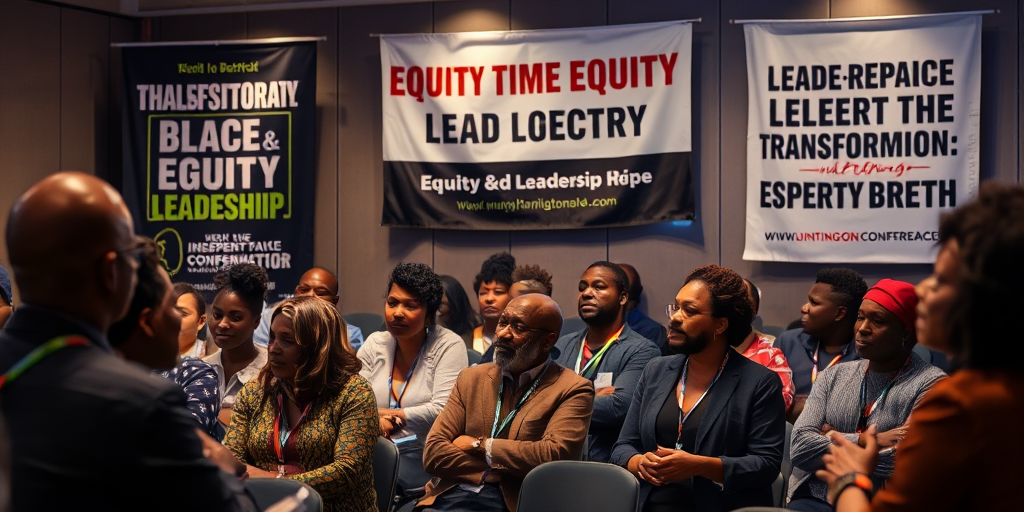
The necessity for the National Black Men in Leadership Conference, now heading for its fifth year, emerged as a poignant response to both tragic events and enduring misrepresentations — heightened in the aftermath of George Floyd’s murder. It’s a collective effort to recalibrate narratives around Black manhood and leadership, highlighting stories of resilience while fostering networking and mentorship opportunities. This event reinforces Detroit is Different’s enduring commitment to rewriting Detroit’s cultural lexicon.
Impact on the Local Community
King-Turner’s relentless advocacy and the mission-driven ethos of Detroit is Different reflect a broader push for change within Detroit’s community. The focus on uplifting Black men into positions of leadership has the potential to invigorate socio-economic growth, promoting inclusive economic frameworks and opportunities.
Local leaders, like Councilman Terrence Watkins, express optimism, saying, “This focus on equity in leadership is crucial. The impact on our schools, local businesses, and governance can be profound and ensures our community thrives from within.” By fostering favorable conditions for potential leaders, there’s an authentic pathway towards empowerment and sustainable growth.
Future Outlook
The initiatives championed by King-Turner and platforms like Detroit is Different offer promising prospects for the future, anticipating greater Black representation in influential sectors. Continued dialogues and initiatives will likely expand into educational and economic policies that further bolster equity. Such groundwork sets a trajectory for Detroit to become a replicable model for other cities aiming to address historical injustices with progressive action.
Resources and Community Engagement
Detroit is Different encourages community support through its archival resources and donation avenues, urging residents to engage with content that propels social progress. Residents are encouraged to delve into podcasts like King-Turner’s, where seminal issues are dissected, offering real-time resources for active participation in community-led change.
In summary, King-Turner and Detroit is Different are at the vanguard of Detroit’s renaissance, purposing diversity and equity as fundamental rights, not as mere bonuses. This steadfast commitment is crafting a legacy where authentic leadership in Detroit is a testament to cultural resilience and visionary change.


