
Hofstra’s Diversity in STEM: Progress Steady, But Gender Gaps Persist
Efforts to foster diversity in STEM (Science, Technology, Engineering, and Mathematics) are a focal point at Hofstra University, renowned for its inclusive initiatives. Despite these ongoing efforts, a substantial gender imbalance remains, with men significantly outnumbering women in most STEM departments, an issue that reflects a national trend but also poses local challenges. Programs designed to bridge this gap have yet to eliminate these disparities, raising crucial community interest in what more can be done to change the tide.
The Present State of STEM Diversity at Hofstra
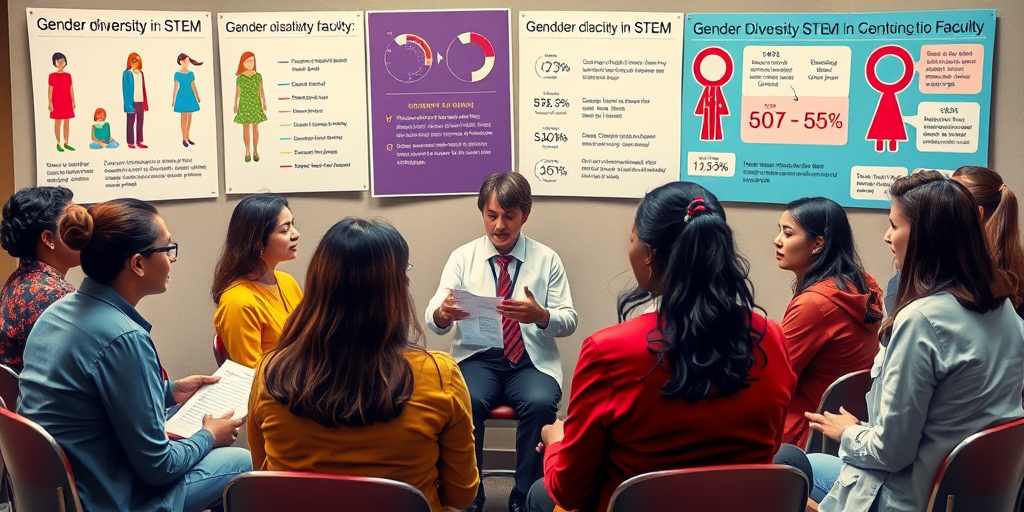
Hofstra University has long emphasized diversity, aiming to create a more balanced representation across its STEM disciplines. Yet, based on 2025 data, men continue to dominate key fields. The physics faculty, for instance, is composed of 83% men, engineering 75%, and computer science 73%. Biology and chemistry departments are nearer to gender parity, mirroring broader national patterns where life sciences see better female representation compared to physics or engineering.
Silvia Franklin, a mathematics professor at Hofstra, stresses that the underrepresentation of women in advanced academic levels perpetuates this cycle. “Math Ph.D.s awarded to women remain under 30%,” she noted, highlighting the effect this has on diversifying faculty roles and challenging stereotypes.
Local Efforts and Their Community Impact
Hofstra’s initiatives, including the Women’s Summer Program in Computing/Engineering and micro-grant opportunities aimed at advancing faculty equity, demonstrate a clear commitment to fostering inclusivity. These programs are vital to encouraging first-year female engineering students, providing a supportive network that many women in these fields lack.
“Simply seeing women teach alters perceptions of what’s achievable,” Franklin emphasized, noting that such visibility can inspire more female students to pursue STEM careers.
Local impact is tangible. Emma Rizzo, a forensic science sophomore, notes a stronger female presence in her chemistry-focused courses but acknowledges that bias, though less overt, still influences classroom dynamics. “Some male professors treat women differently, depending on the class,” she remarked.
Ongoing Challenges and Subtle Biases
Despite the strides in certain areas, subtle biases persist, manifesting in everyday interactions. Lisa Krause, biology department chair, discussed the frequent misaddress of female faculty as “Ms.” instead of “Doctor,” which undermines their authority. Biases like these, while seemingly minor, contribute to a broader culture of inequity.
Klaudia Frankowski, a junior majoring in biology, highlighted the stark contrast between her experiences in biology versus physics courses. “In biology, parity is evident, but in physics, I’m one of only six women in a class of 30,” Frankowski reported, hinting at potential implications for retention.
Administrative Commitment and Future Implications
Hofstra’s administrative commitment, led by Vice President for Equity and Inclusion Cornell Craig, is evident. His office supports equitable hiring through bias training and standardized evaluation rubrics, and while acknowledging national resistance against such diversity initiatives, the university remains steadfast in its push for inclusion.
Hiring inclusive faculty remains only one piece of the puzzle. Retention and continuous support are necessary to sustain diversity, requiring mentorship and community – an aspect Craig emphasizes. “Recruiting women is the first step; supporting them to stay is what makes the difference.”
Balancing Perspectives and Looking Ahead
There is clear recognition that achieving genuine gender equity in STEM at Hofstra demands more than just policy. It requires embedding inclusivity across all layers of the academic structure – from hiring practices to course assignments and beyond. Balancing perspectives ensures that changes are both sustainable and effective, benefitting the entire campus community.
As Hofstra continues to address these disparities, its efforts invite broader contemplation within the academic sphere, reaffirming diversity as a priority and fostering an environment where every student and faculty member has equal opportunity to thrive. Amidst ongoing efforts, community members are encouraged to participate in associated dialogues, ensuring their voices contribute to building a more inclusive future, where representation in STEM fields occurs by conscious design rather than historic luck.
As Hofstra remains dedicated to pushing for broader representation, the community’s role in fostering these changes cannot be overstated. Local residents and stakeholders are invited to actively engage with these initiatives, ensuring they reflect communal values and ambitions, ultimately reinforcing Hofstra’s reputation as a leader in educational inclusion. For details on upcoming events and resources, community members can reach out to Hofstra’s Office of Equity and Inclusion or visit their official website.
Through its multifaceted approach, Hofstra aims to not only bridge present gaps but set a precedent for other institutions grappling with similar challenges, rooting its strategy deeply in community interest and local impact.


