
NWSL’s Progressive Path: Jessica Berman Discusses Salary Cap, Calendar Changes, and Transgender Inclusion
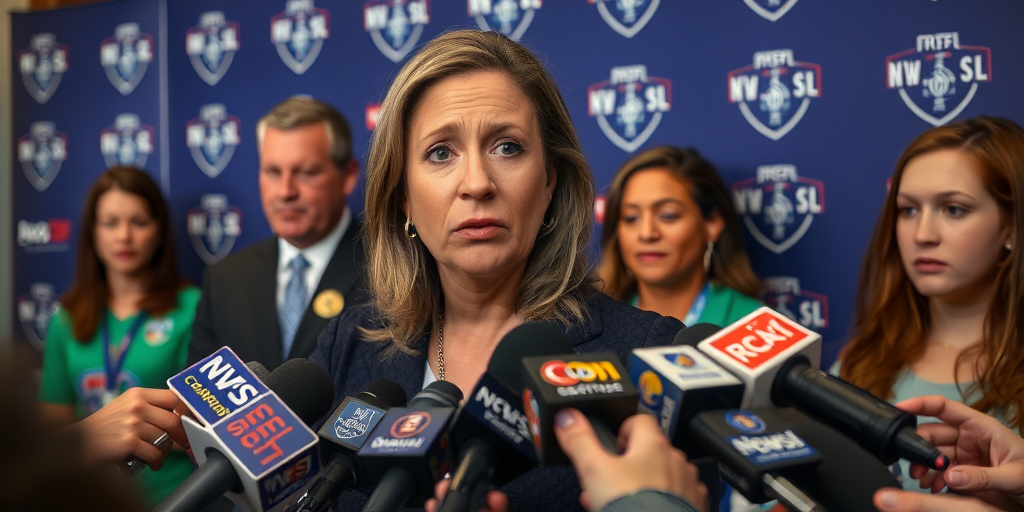
As the National Women’s Soccer League (NWSL) gears up for its 2025 Championship, Commissioner Jessica Berman’s recent address highlighted the league’s strides and impending challenges. With significant developments on the horizon, Berman’s insights shed light on key issues like salary caps, schedule changes, and inclusion policies, influencing both local communities and the broader landscape of women’s sports.
A Record-Breaking Year for the NWSL
Berman commenced her remarks by celebrating yet another record-breaking year for the NWSL, fostering a heightened sense of community interest. With the league averaging over 10,000 fans per game for the third straight year, momentum is firmly in the NWSL’s favor. This success is particularly resonant with local fans, evidenced by the Washington Spirit’s home games at Audi Field consistently attracting more than 15,100 fans, culminating in a record-setting 40,000 spectators for a match against Bay FC in San Francisco.
For Woke News, highlighting the local impact of such growth is vital. As we observe these numbers, they signify a burgeoning appetite for women’s soccer that extends beyond mere attendance, directly influencing regional pride and economic stimulation.
Salary Cap and Trinity Rodman’s European Temptations
Berman’s address didn’t shy away from the pressing issue of salary constraints, especially as star players like Washington Spirit’s Trinity Rodman face lucrative offers from European clubs. The NWSL salary cap, having quadrupled since 2019, exemplifies the league’s commitment to competitive pay, yet it still pales against Europe’s financial allure. Set to reach $3.5 million per team by 2026 and exceed $5 million by 2030, these increments strive to keep top talents home.
Karl Stevens, a local sports economist, provided Woke News with his perspective: “The salary cap’s expansion is a promising step, yet retaining talents like Rodman demands more creative compensatory frameworks within the league’s financial ecosystem.” For residents of Washington, the potential loss of Rodman to European clubs spotlights broader challenges intrinsic to elevating women’s sports locally and nationally.
MLS Calendar Changes and NWSL Scheduling
A significant focal point of Berman’s commentary was the anticipated Major League Soccer (MLS) calendar change in 2027, shifting to a July-May season. This adjustment could ease scheduling congestion for the NWSL, although it introduces challenges such as shared stadium availability, since several NWSL clubs play in MLS venues.
For local teams like Gotham FC, which shares a facility with the New York Red Bulls, this change necessitates strategic planning. Dr. Amanda Hartman, a local sports management expert, suggests that “synchronized calendar adjustments could streamline operations but will require negotiation and collaboration between leagues to optimize resource sharing.”
Berman reassured residents that any potential schedule changes for the NWSL will be approached thoughtfully, keeping the community’s enthusiasm at the forefront. Smooth transitions could enhance the fan experience, benefiting local economies reliant on event-related activities.
Fostering Inclusion: Transgender Policy Evolution
The NWSL’s stance on transgender inclusion was another pivotal point in Berman’s address. Although currently an enforced policy is absent, affirmations of inclusivity resonate within the league. Berman emphasized ongoing collaborations with players and experts, ensuring any policy shifts align with community and player values.
Local LGBTQ+ advocate Sarah Martinez spoke to Woke News, “An explicit commitment to inclusion fostered by the league affirms our community’s evolving standards on diversity, acceptance, and equality.” Such actions reflect broader societal progress, potentially positioning the NWSL as a leader in sports inclusivity.
Community Concerns: Club Relocations and Ownership
Regarding club relocations, Berman articulated a firm stance: They remain a “last resort,” reaffirming clubs as community cornerstones. With local rumor mills buzzing on club movements, notably surrounding the Houston Dash and Racing Louisville, Berman’s reassurance provides residents stability.
Meanwhile, an increase in multi-club ownership interests presents ethical complexities yet offers developmental benefits. Washington Spirit owner Michele Kang exemplifies this with her engagements in France and England. Local sports analyst Tom Brecker notes, “Multi-club ownership could catalyze resource influx and global exposure for local clubs. But transparency and regulatory oversight ensure integrity.”
Conclusion: A Holistic Perspective on Growth
As we ponder these evolving dynamics within the NWSL, the impact on local communities resonates. The symbiotic relationship between rising attendance, strategic financial decisions, and progressive policies paints a promising picture for the league’s future. Residents remain at the heart of this journey, as the NWSL endeavors to balance competitive growth with its foundational community values.
For those seeking more information on policy developments or community resources, the NWSL has committed to ongoing public forums and transparent communications. Engaging fans and stakeholders is pivotal as the league continues its trajectory, reinforcing its role as a dynamic force in women’s soccer and a beacon of local community interest.
In this, we find a narrative not just of sports, but of cultural evolution, embodying the spirit of progress and communal strength, truly emblematic of what Woke News aims to capture: the heartbeat of collective growth dovetailing with the passion of sport.


