
Washington Initiatives Criticized for Endangering LGBTQ+ Community Safety
A coalition of parents, educators, and law enforcement professionals in Washington is rallying against two proposed legislative initiatives perceived as “anti-trans,” arguing they pose a threat to the safety and well-being of the LGBTQ+ community. The initiatives, backed by the conservative group Let’s Go Washington, have sparked intense debate and protest among local residents.
Overview of the Proposed Initiatives
Initiative IL 26-001 aims to reinstate what is termed the “Parents’ Bill of Rights,” a measure that ostensibly seeks to enhance parental control over their children’s education and upbringing. Meanwhile, Initiative IL 26-638 seeks to prohibit transgender girls from participating in girls’ sports. Proponents argue these initiatives are necessary to return decision-making power to parents, asserting, “We don’t co-parent with the government,” as per Brian Heywood, the hedge fund manager leading the initiative through Let’s Go Washington.
The initiatives need to gather enough valid signatures by January 2, 2026, to have a chance at being included on the November 2026 ballot. However, opponents are deeply concerned about the potential ramifications these initiatives might have on the LGBTQ+ community, particularly on students in Washington state.
Local Impact and Community Response
Washington Families for Freedom, a coalition opposing these measures, argues that they will lead to increased discrimination and abuse against LGBTQ+ students. Libby Watson, the campaign manager for this coalition, contends, “Paid signature gatherers are promoting poorly written initiatives that will threaten the safety of every Washington student.”
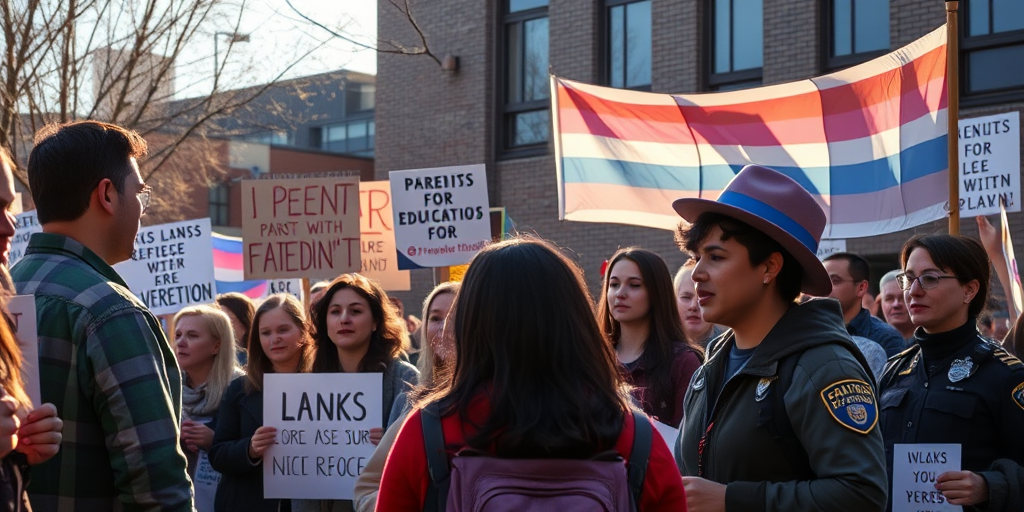
These concerns were echoed at a recent protest that took place outside Franklin High School in Seattle, aligning with the Transgender Day of Remembrance. During the protest, speakers emphasized the life-altering impacts of policies targeting LGBTQ+ youth. Claire Michelle, a transgender woman and small business owner, shared her personal struggles after being forced out of her home when she came out to her parents. “I fought through homelessness and starvation,” she recounted, “Nobody should have to go through what I did.”
The Broader Context: Parental Rights and LGBTQ+ Issues
These initiatives are not isolated events but part of a broader national discourse regarding parental rights and LGBTQ+ issues. Similar debates have surfaced in various states, reflecting a growing cultural and political divide. Furthermore, the controversy is not new to Washington, where previous iterations of the “Parents’ Bill of Rights” have been hotly contested.
Earlier, a modified version of this bill reached the Senate floor, prompting renewed controversy over the extent of parental control within public education. Opponents of these initiatives fear that, if passed, they would worsen existing marginalization and foster environments that are unsafe for LGBTQ+ students.
Perspectives from Both Sides
Supporters of the initiatives argue that they are crucial for safeguarding parental rights. Former teacher and parent, Lisa Harrington, expressed her support stating, “As parents, we should have the final say in what’s best for our children’s education and upbringing, not bureaucrats.”
Conversely, Adriana Cruz, a guidance counselor from Seattle, emphasized the potential harm of these measures. “We are here to guide, support, and protect all students, irrespective of their gender identity. Initiatives like these undermine that mission by singling out vulnerable groups,” she asserted.
Potential Implications for the Future
The implications of these initiatives extend beyond immediate effects on students. Should they pass, there could be subsequent legal challenges and broader impacts on Washington’s social and educational landscape. The potential for increased tension within communities over educational policy and student rights is significant.
Moreover, other states watching Washington’s battle might feel emboldened to pursue similar measures, influencing nationwide policies concerning children’s education and the role of parents therein.
Resources for Community Support
For residents interested in these developments, local organizations and support networks are offering resources and forums for discussion. Washington Families for Freedom hosts regular meetings and provides informational materials through its website and community events. Additionally, advocacy groups like the ACLU of Washington are providing legal perspectives on the potential impacts of the initiatives.
As Washington residents continue to engage with these pivotal issues, the conversation surrounding parental rights, educational policies, and LGBTQ+ safety remains a critical focal point for community interest and local impact.


