
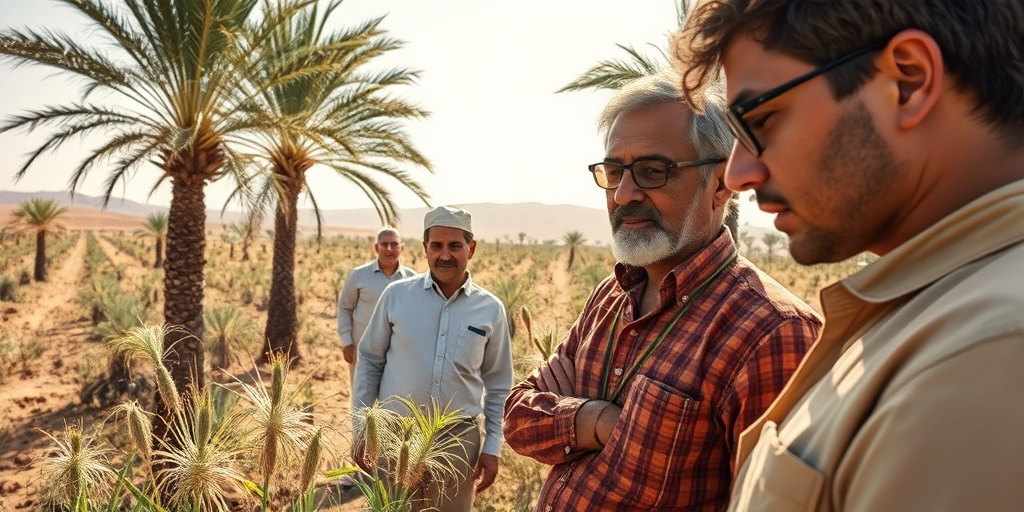
Exploring Male Date Palm Clone Diversity in Morocco: A Pathway to Sustainable Agriculture
In the verdant landscapes of Morocco, a remarkable study on the genetic diversity of male date palm clones offers a transformative vision for agriculture. Conducted by Channaoui and colleagues, this biotechnological exploration sheds light on the phenotypic variations within the iconic Phoenix dactylifera L., underscoring its critical role in agricultural productivity and ecosystem sustainability.
Unveiling Genetic Richness
The study, prominent in the recent issue of Discover Plants (2025), reveals significant phenotypic diversity among male date palm clones. Led by Channaoui, the research team meticulously documented traits such as height, leaf length, and flower morphology, highlighting genetic variations vital for breeding programs. This depth of diversity not only aids in selecting superior clones but also enhances overall agricultural resilience.
Dr. Ahmed, a local expert in agricultural genetics, emphasizes the importance of such studies. “Understanding the phenotypic traits of date palm clones is crucial for developing robust agricultural practices that withstand environmental adversity. It’s about harnessing nature’s diversity to promote sustainability,” he commented.
The Socio-Economic Fabric
Beyond genetics, the study amplifies the socio-economic significance of date palms in Morocco. With deep cultural roots and pivotal economic value, date palms are indispensable to local markets and global exports. By improving the crop’s quality through focused breeding, Morocco can enhance farmer incomes and fortify its economic stability.
Fatima El Mekki, a farmer in the Zagora region, highlights the local impact: “Date palms are more than just crops; they are lifelines. A better yield means better life quality for us. These advancements in agriculture are crucial for securing our future,” she articulated.
Advancing Genetic and Agronomic Synergy
The integration of genotyping and phenotyping techniques marks a significant development in plant breeding, bridging genetics with agronomy. Data-driven decisions based on genetic profiling foster innovative approaches to crop enhancement. This methodology allows for precision in selecting traits that can thrive under specific environmental stresses, vital for climate adaptation strategies.
Professor Jamal Al-Maadid, from the University of Marrakesh, elaborates, “The convergence of genetic science and traditional agronomy can revolutionize crop resilience. The study on date palm clones offers a blueprint for future agricultural practices amidst global climate change.”
Navigating Climate Challenges
The implications of this research spill over into conversations on climate adaptation. Date palms, with their adaptability to arid climates, stand as a testament to resilience. Preserving this diversification safeguards food security and sustainability in the face of climatic uncertainties. As researchers observe varying clone performances under environmental stressors, the path to selecting drought-resistant varieties becomes clearer.
Local agricultural councils are poised to utilize these findings, considering policy adaptations that embed genetic diversity into long-term agricultural planning. Moha Berrahma, a council official, suggests, “We need actionable frameworks that incorporate genetic insights to bolster our agricultural policies. This research provides the scientific backing we need.”
A Broader Agricultural Context
This study aligns with ongoing efforts within the biotechnology field. Similar initiatives, such as microbial community enhancements for seed germination and transforming saline wastelands through inland aquaculture, illustrate the broader potential of biotechnology in addressing agricultural challenges.
Bioengineer.org, the platform disseminating these findings, supplements its comprehensive agricultural coverage with insights into CEO social media strategies and medical advancements, reflecting a dedication to knowledge sharing across disciplines. Through events, blogs, and a strong social media presence, the platform ensures community engagement, keeping global audiences informed on scientific progress.
Looking Ahead
The prospective changes heralded by this research carry significant potential for local and international agriculture. By leveraging genetic diversity, Morocco can position itself as a leader in sustainable agricultural practices. Ensuring food security while mitigating climate risks remains imperative, and studies such as these herald a promising frontier.
As the genetic tapestry of date palms unravels, the promise of sustainable agriculture becomes conceivable. With ongoing research and strategic policy adaptations, Morocco’s agricultural landscape is set to flourish, offering a beacon of hope for other regions grappling with similar challenges.
The cultivation of knowledge, much like the careful nurturing of crops, requires patience, dedication, and a collective drive toward innovation. For the residents of the Rio Grande Valley and beyond, this story exemplifies the power of scientific discovery to inspire change and secure a prosperous future.
Inquiries regarding the study and its implications can be directed to local agricultural departments, with further resources available on Bioengineer.org for those interested in delving deeper into this transformative research. As the scientific community continues to unveil the complexities within our ecosystems, staying engaged remains essential for fostering informed and resilient communities.


